
Something is off.
You look at your website, your business cards, your social profiles, and none of it feels like you anymore. The logo still works. The colors are fine. Nothing is broken. But something shifted, and now the whole thing feels like a suit you bought three years ago that doesn't quite fit the way it used to.
This is one of the most common conversations we have with business owners who reach out to Studio FLACH. They can't always name the problem, but they feel it. And that feeling matters more than most people give it credit for.
The Gap Between Who You Are and What People See
Brands don't expire on a set schedule. They erode. Slowly, and then all at once.
Your business grows. You refine your services. You get sharper about who you serve and how you talk about what you do. Your pricing changes. Your client base shifts. Maybe you've moved from freelancing into running a proper studio. Maybe you started as a generalist and now you're a specialist.
But the brand, the visual identity, the website, the messaging, stayed behind. It still reflects the version of your business that existed when you first put it together. The gap between who you are now and what your brand communicates to a stranger is where trust leaks out.
That gap costs you. Not dramatically. Not in a single lost deal you can point to. It costs you in the slow bleed of prospects who visit your site, feel something is slightly off, and leave without reaching out. You never see those people. You never know they were there.
Five Signs Your Brand Has Outgrown Your Business
Not every brand feeling "off" means you need to scrap everything and start over. But these five signs tend to show up when the misalignment is real and getting worse.
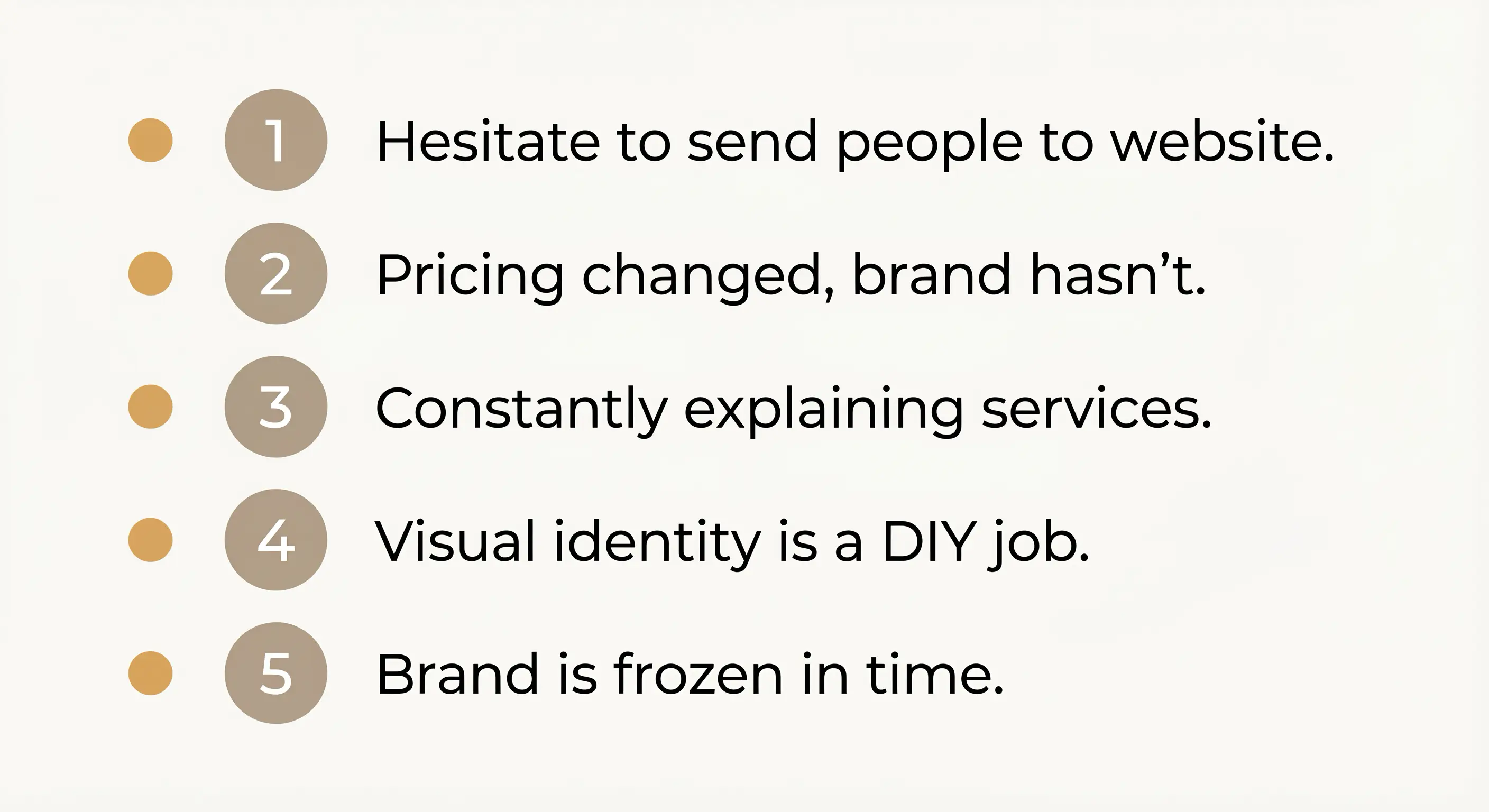
1. You hesitate to send people to your website
This is the clearest signal. If a potential client asks for your site and your first instinct is to apologize or explain that it's "being updated," the brand is working against you. Your website should be something you hand over with confidence. When it isn't, every introduction starts with a deficit.
2. Your pricing has changed but your brand hasn't
You charged 2,000 per project when you designed that logo. Now you charge 10,000. The service got better. The results got bigger. But the brand still looks and sounds like the $2,000 version. That disconnect creates friction. A prospect comparing your pricing to your online presence will feel something doesn't add up, even if they can't articulate why.
3. You keep explaining what you actually do
If you find yourself constantly clarifying your services in calls, emails, or DMs because the website doesn't do it for you, the messaging has fallen behind. A strong brand answers the basic questions before a prospect ever gets on a call: What do you do? Who is it for? Why should I care?
4. Your visual identity was a DIY job (and it shows)
There's no shame in starting with a Canva logo and a WordPress template. Most businesses do. But there's a shelf life on that approach. At some point, the DIY identity becomes a ceiling. It signals "early stage" to people who are looking for "established and trustworthy."
5. You've evolved, but the brand is frozen
You stopped offering a service two years ago. Your tagline references something you no longer believe in. The "About" page describes a version of you that doesn't exist anymore. The brand became a time capsule. And time capsules are interesting in museums, not on a business website.
If three or more of these sound familiar, the brand isn't just "off." It's holding you back.
Cosmetic Fix or Strategic Refresh?
Here's where most business owners make a mistake. They feel the misalignment and jump straight to visuals. New logo. New colors. New website. The surface gets polished, but the same confusion sits underneath.
Before touching a single visual element, you need to answer four questions:
- Who are you serving now? Not who you served when you started. Now.
- What do you want to be known for? One clear thing. Not five.
- How is your business different from others in your space? Specifically.
- What should someone feel when they encounter your brand for the first time?
If you can answer all four with clarity and confidence, you might only need a visual refresh. New identity, same strategy.
If those answers feel muddy, a new logo won't fix it. You need to go back to the foundation and rebuild from the positioning up.
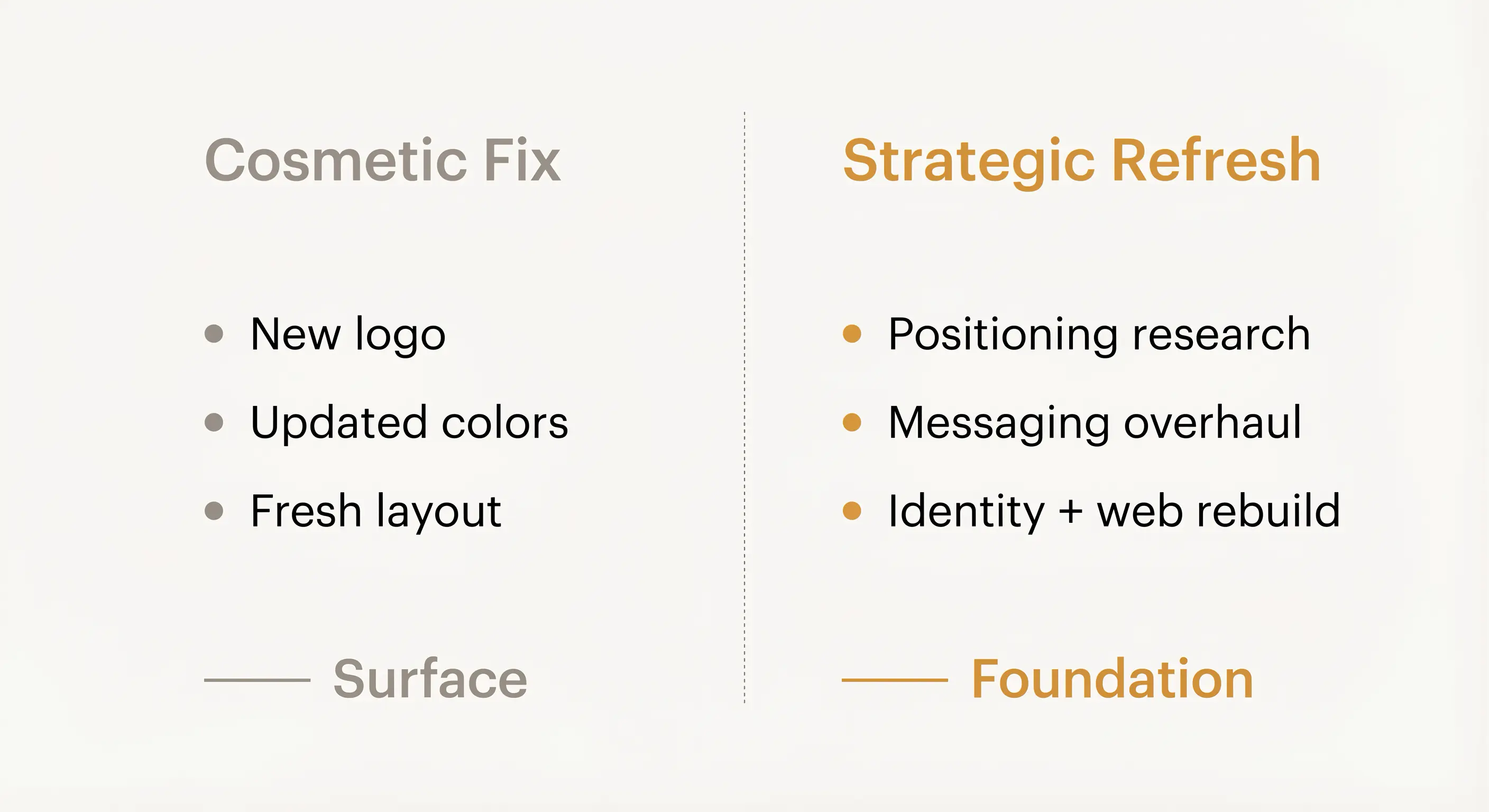
A cosmetic fix polishes the surface. A strategic refresh realigns the foundation. The difference shows up in every client conversation, every proposal, and every first impression for years after launch.
What a Strategic Refresh Actually Looks Like
A proper brand refresh isn't picking new colors from a mood board. It's a structured process that starts with research and ends with a brand that matches the business you've built.
At Studio FLACH, we break this into clear phases:
Research and positioning come first
Before any design work begins, we dig into the business. Who are your best clients? What do competitors look like? Where are the gaps in how you present yourself versus how you actually deliver? This is what our Strategic Clarity™ process covers. It produces the strategic foundation that every visual decision is built on.
Identity follows strategy
Once the positioning is locked, the visual identity gets built to support it. Logo, typography, color, brand guidelines. Every choice is grounded in a reason. This is True Mark™, and it exists to make sure the brand doesn't just look good but works for the business behind it.
The website brings it all together
A brand that lives only in a PDF guidelines document isn't doing much. The website is where it all becomes real, where a stranger encounters the brand, understands the value, and decides whether to take the next step. True Space™ is where strategy and identity become a conversion tool.
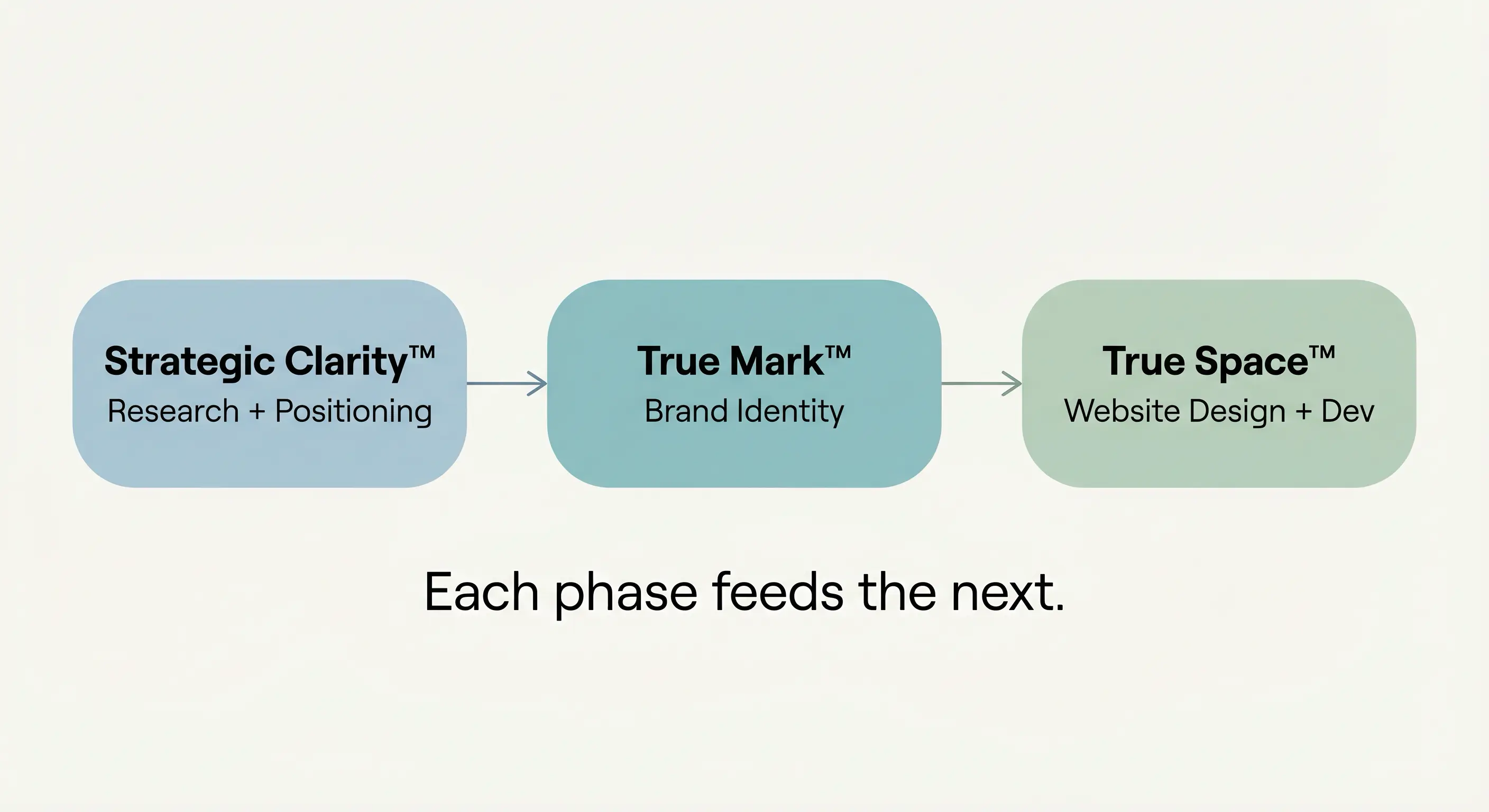
The whole thing is designed to be sequential. Each phase feeds the next. Skip one and the others lose their footing.
When to Act on It
Timing matters. There are two common traps business owners fall into:
Too early. They rebrand every 18 months chasing trends. The brand never builds recognition because it keeps changing. Consistency beats novelty over time.
Too late. They wait until the brand is actively damaging their reputation, losing deals, or causing embarrassment. By then, the cost isn't just the rebrand. It's the months or years of missed opportunities that piled up while they hesitated.
The right time is when the gap between your business and your brand starts affecting how people perceive your work. When the brand is no longer an accurate reflection of the quality you deliver, every day you wait widens the gap.
You don't need to wait for the perfect moment. You need to stop hoping the problem fixes itself.
If any of this hit close to home, that's the signal. Not every brand problem needs a full rebuild. But every brand problem needs honest recognition.
And if you're unsure where the real gaps are, that's what a conversation is for. Reach out to Studio FLACH and we'll help you figure out whether it's a quick fix or something deeper.

