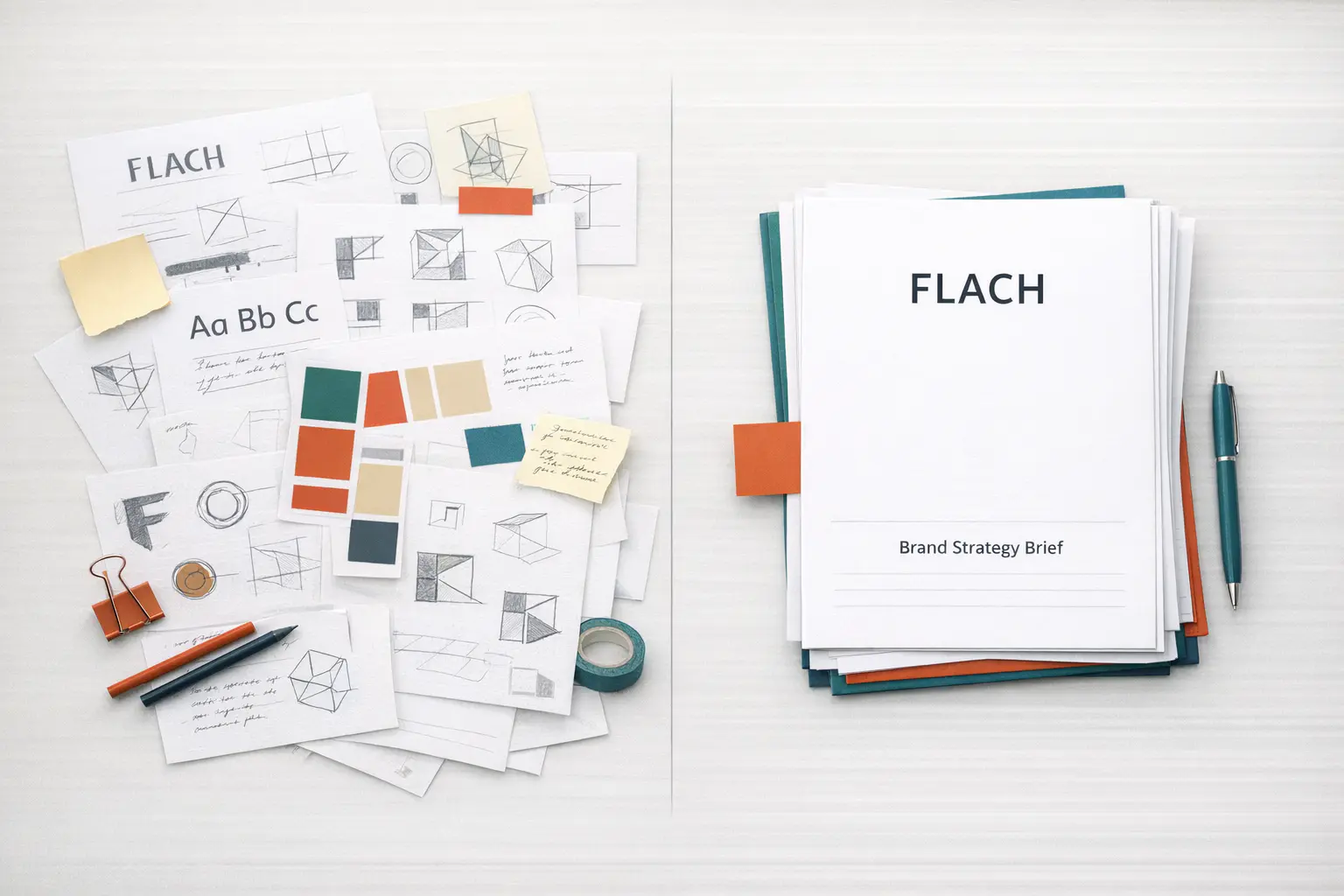
The Pattern Nobody Talks About
A business owner reaches out. They've got momentum. Clients are coming in, revenue is growing, and the brand they threw together in year one is starting to feel embarrassing. They want a new logo. A new website. Something that finally looks like the business they've built.
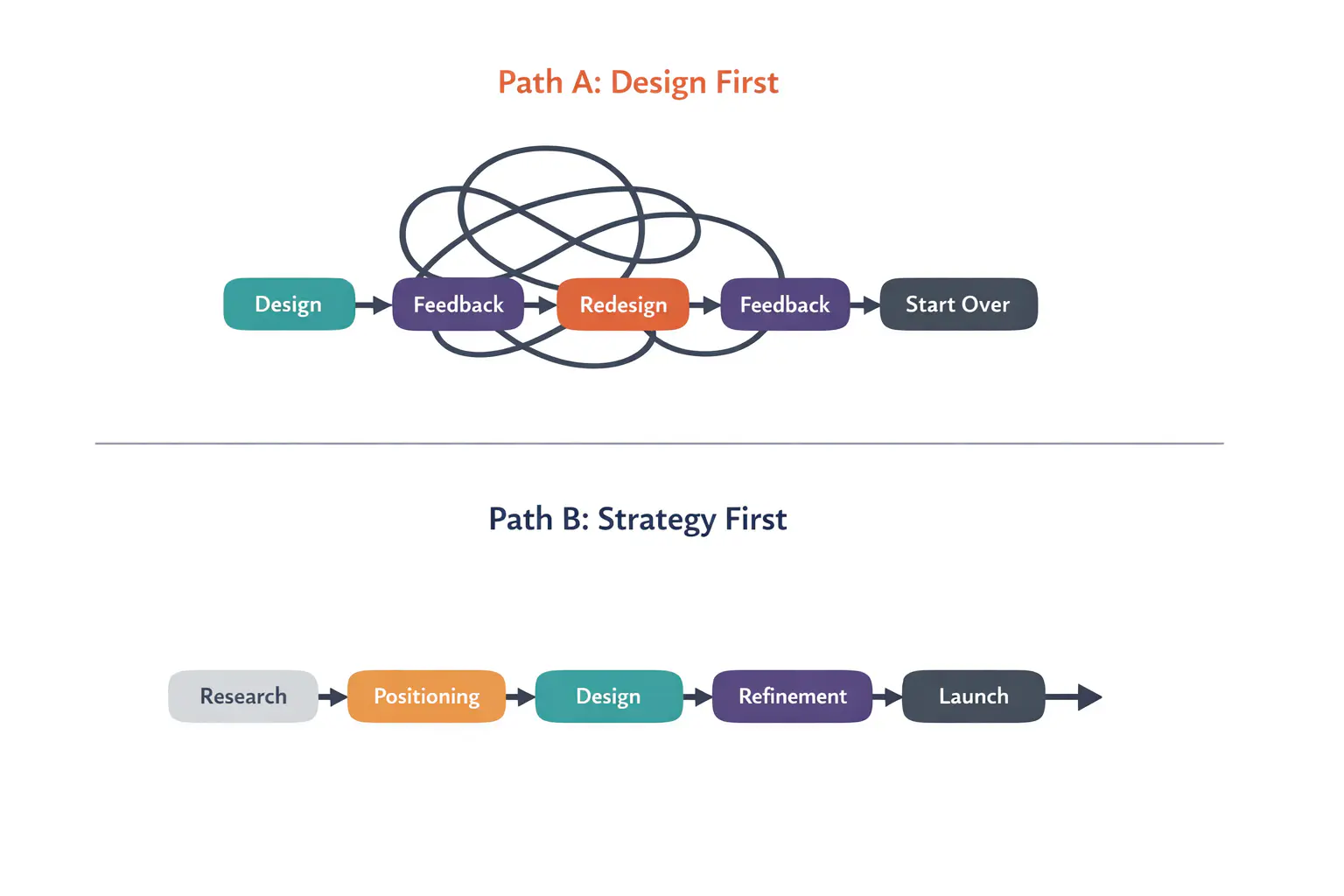
So they hire a designer. They skip the research. They skip positioning. They jump straight into colors, fonts, and layouts.
Six weeks later, the new brand looks great. Polished. Modern.
And it doesn't work.
The messaging is off. The website attracts the wrong people. The visual identity feels disconnected from how the business actually wins clients. So they start over. New designer, new budget, new timeline.
This is the most expensive pattern in branding. Not because the design was bad. Because it was built on nothing.
Why "Just Make It Look Good" Fails
Design without strategy is decoration. It might look sharp in a portfolio, but it won't do the job a brand is supposed to do: build trust with the right people, fast enough that they take the next step.
Here's what happens when you skip the thinking and go straight to the making:
- You design for taste, not for fit. Aesthetic choices get made based on what the owner likes instead of what the audience responds to. Those are often very different things.
- Your messaging defaults to generic. Without clear positioning, every headline sounds like every competitor. "We're passionate about quality." "We put clients first." It says nothing.
- Your website looks good but converts poorly. There's no strategic structure guiding visitors toward a decision. Pages exist because "we should probably have an About page," not because each page serves a purpose in the buyer's journey.
- Revisions spiral. When there's no strategic foundation to evaluate against, feedback becomes subjective. "I don't love it" replaces "this doesn't communicate our positioning." The project drags.
None of these problems are about talent. A skilled designer can still produce the wrong thing if they're aiming at the wrong target.
What "Strategy First" Actually Means
Let's be specific. When we talk about doing the strategic work before design, we're talking about answering a short list of questions that most businesses skip:
Who are you actually for?
Not "everyone who needs our service." A defined audience with specific problems, specific language, and specific expectations. The more precisely you can describe your best client, the more precisely your brand can speak to them.
What do you do that your competitors don't (or won't)?
This isn't about being "better." Better is vague. This is about finding the real difference in how you work, what you prioritize, or what you deliver that sets you apart in a way that matters to your audience.
How do your clients describe the experience of working with you?
The words your clients already use are worth more than anything a copywriter invents. If clients keep saying "they made it simple" or "I finally felt like someone understood my business," that language belongs in your brand. It's already proven.
Where does your brand show up, and what job does it need to do there?
A brand that lives mostly on Instagram has different requirements than one that sells through proposals and referrals. Context shapes everything, from visual tone to messaging priority.
When you answer these questions before opening a design tool, the creative work gets faster, sharper, and more aligned on the first pass. Revisions shrink. Confidence grows. The result actually fits.
The Real Cost of Skipping This Step
The financial cost is obvious. A project done twice costs twice as much. Sometimes more, because the second time comes with urgency and frustration.
But the hidden costs are worse:
- Lost time. A branding project that should take weeks stretches into months. Meanwhile, the business keeps showing up with a brand that doesn't represent it.
- Lost trust. Every bad-fit touchpoint (a confusing homepage, a generic tagline, a visual identity that feels "off") is a potential client who moves on without saying why.
- Decision fatigue. Without a strategic framework, every design choice becomes a debate. Should the button be blue or green? Should we lead with this headline or that one? These questions have clear answers when strategy is in place. Without it, they become opinion wars.
- Team misalignment. If the brand doesn't have a defined direction, everyone on the team (and every future contractor) interprets it differently. Inconsistency compounds over time.
How We Handle This at Studio FLACH
Our process starts with Strategic Clarity™ for a reason. Before we touch typography, color palettes, or page layouts, we do the work that makes those decisions obvious instead of arbitrary.
What that looks like in practice
- Research into your market, competitors, and audience. Not surface-level Googling. Actual analysis of where opportunities exist and where your brand can own space.
- Positioning work that gives your brand a clear, defensible point of view. Something you can build messaging around and test creative decisions against.
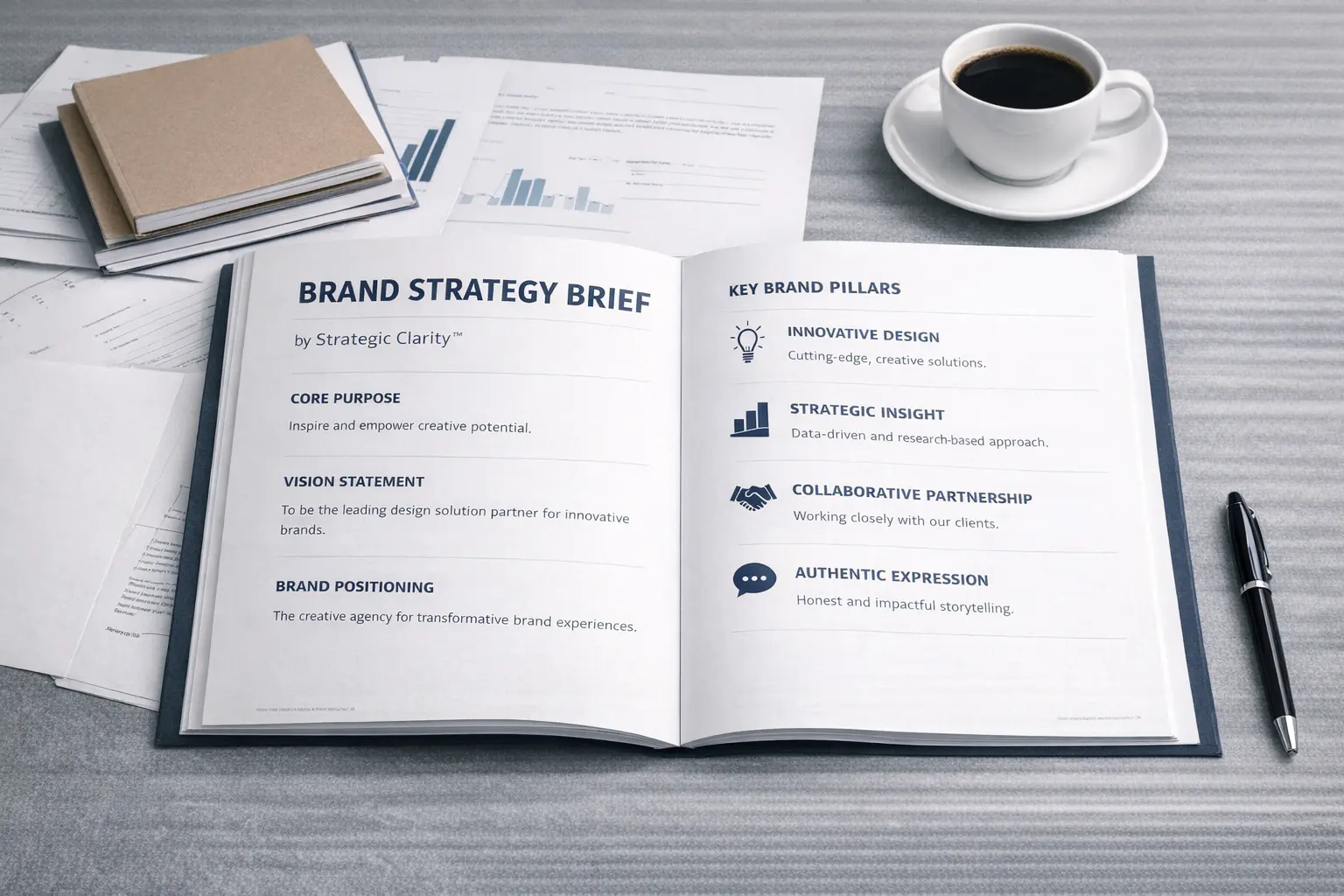
- A strategic brief that becomes the reference point for every design choice that follows. When a question comes up during the brand identity or website phase, we go back to the brief. The answer is usually already there.
This doesn't add months to the timeline. It usually saves time overall, because the design phase runs with fewer wrong turns, fewer "let's try something completely different" moments, and fewer rounds of revision.
The Question to Ask Before You Start
Before hiring anyone for a brand or website project, ask yourself one thing:
Can I clearly articulate who this brand is for, what makes it different, and what it needs to communicate, in two or three sentences?
If the answer is yes, you're ready for design.
If the answer is some version of "I'll figure it out as we go," you're about to pay for that uncertainty. Probably more than once.
Strategy isn't a phase you push through to get to the fun part. It's the reason the fun part works.

