
The launch is done. The website is live. The logo looks great. You've shared it everywhere and the compliments are rolling in.
And then... silence.
Not the bad kind. Just the regular kind. The kind where business continues, emails pile up, and that shiny new brand starts gathering dust like everything else on your to-do list.
This is where most businesses lose the plot.
The Post-Launch Vacuum
Launching a brand takes months of focused work. Discovery calls, strategy sessions, revisions, decisions. By the time you go live, you're exhausted. Relieved. Ready to move on.
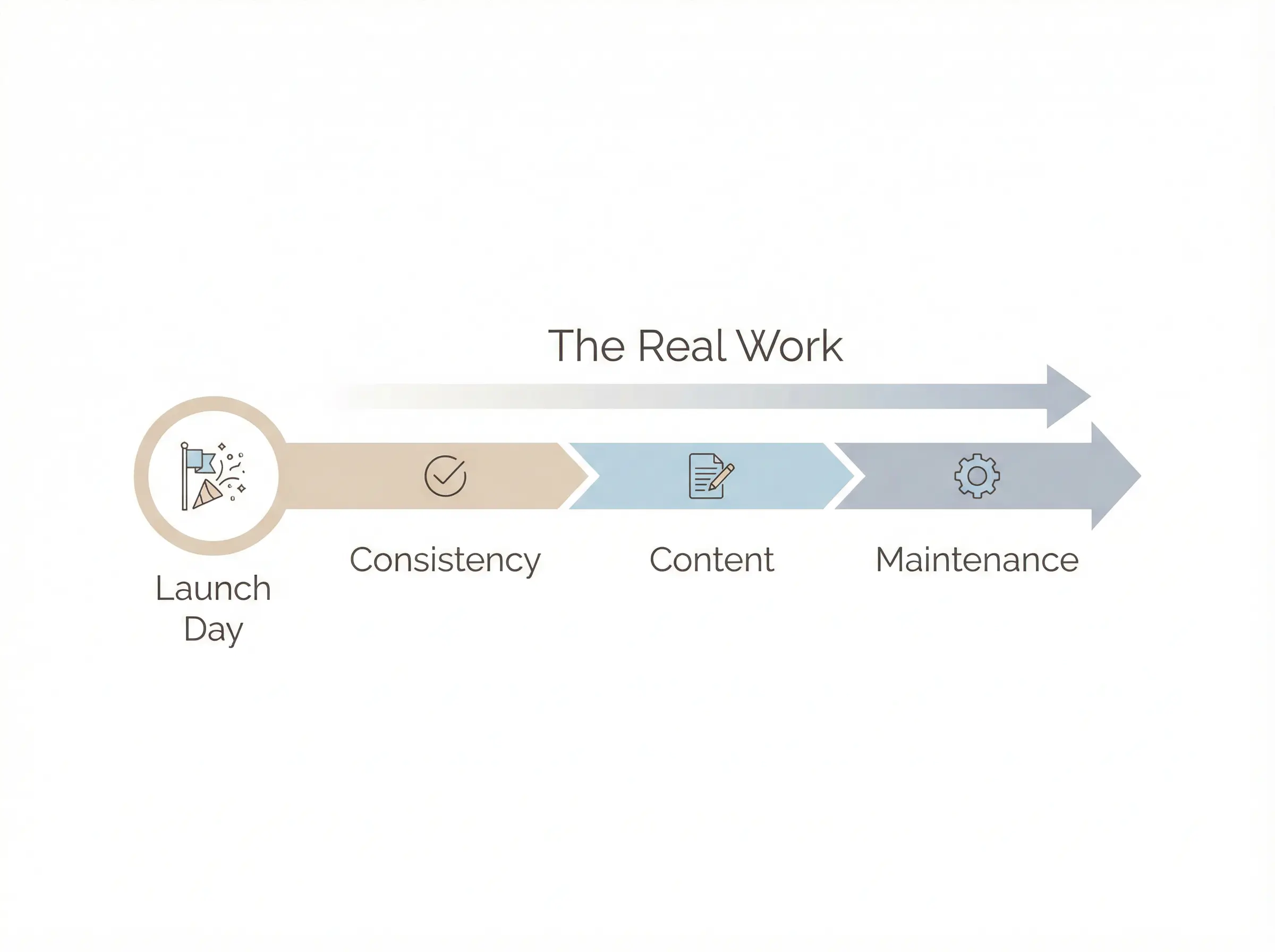
But a brand isn't a project you complete. It's a system you maintain.
The businesses that get the most value from their investment treat launch day as the starting line, not the finish. The ones that struggle? They treat it like a graduation ceremony and never look back.
What Actually Needs to Happen
In the weeks and months after launch, a few things demand your attention:
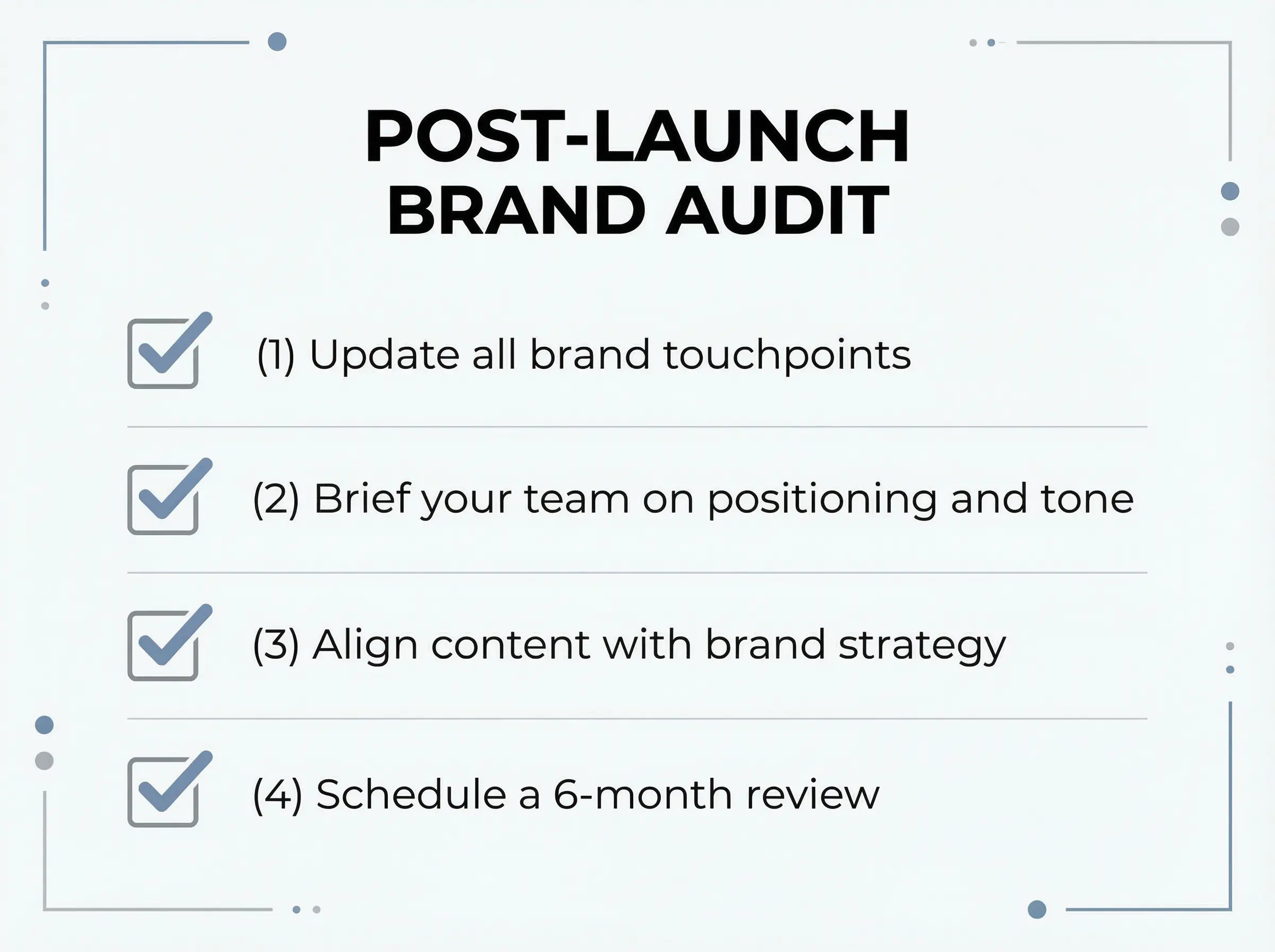
1. Consistency across every touchpoint.
Your new brand should show up everywhere. Email signatures, invoices, social media profiles, presentation templates, packaging, signage. If a customer sees your old logo on a proposal the week after you launch your new one, you've already diluted the investment.
This sounds obvious. It rarely gets done. Make a list of every single place your brand appears and update them systematically.
2. Team alignment.
If you have employees or contractors, they need to understand the brand. Not just what it looks like, but what it means. How should they talk about the company? What tone do they use in emails? What's the story they tell at networking events?
A brand that lives only in a PDF somewhere isn't a brand. It's a file.
3. Content that reinforces the positioning.
Your website copy probably nails your positioning. But what about your blog? Your LinkedIn posts? Your sales emails? Every piece of content you produce either strengthens your brand or weakens it. There's no neutral.
4. Periodic check-ins.
Six months after launch, take an honest look. Is the brand still working? Are you using the assets correctly? Has your business evolved in ways that create friction with your current identity? Catching small misalignments early prevents expensive overhauls later.
The Temptation to Tinker
Here's what not to do: start changing things immediately.
Post-launch doubt is real. You'll second-guess the color. Wonder if the tagline is right. Notice a competitor doing something different and feel the pull to pivot.
Resist this.
A brand needs time to settle. Your audience needs repeated exposure before it registers. Changing things too quickly means you never build the recognition you paid for in the first place.
Give it at least six months before you evaluate. A year is better. Unless something is genuinely broken (wrong information, legal issues, major strategic shift), leave it alone and let it work.
The Support Question
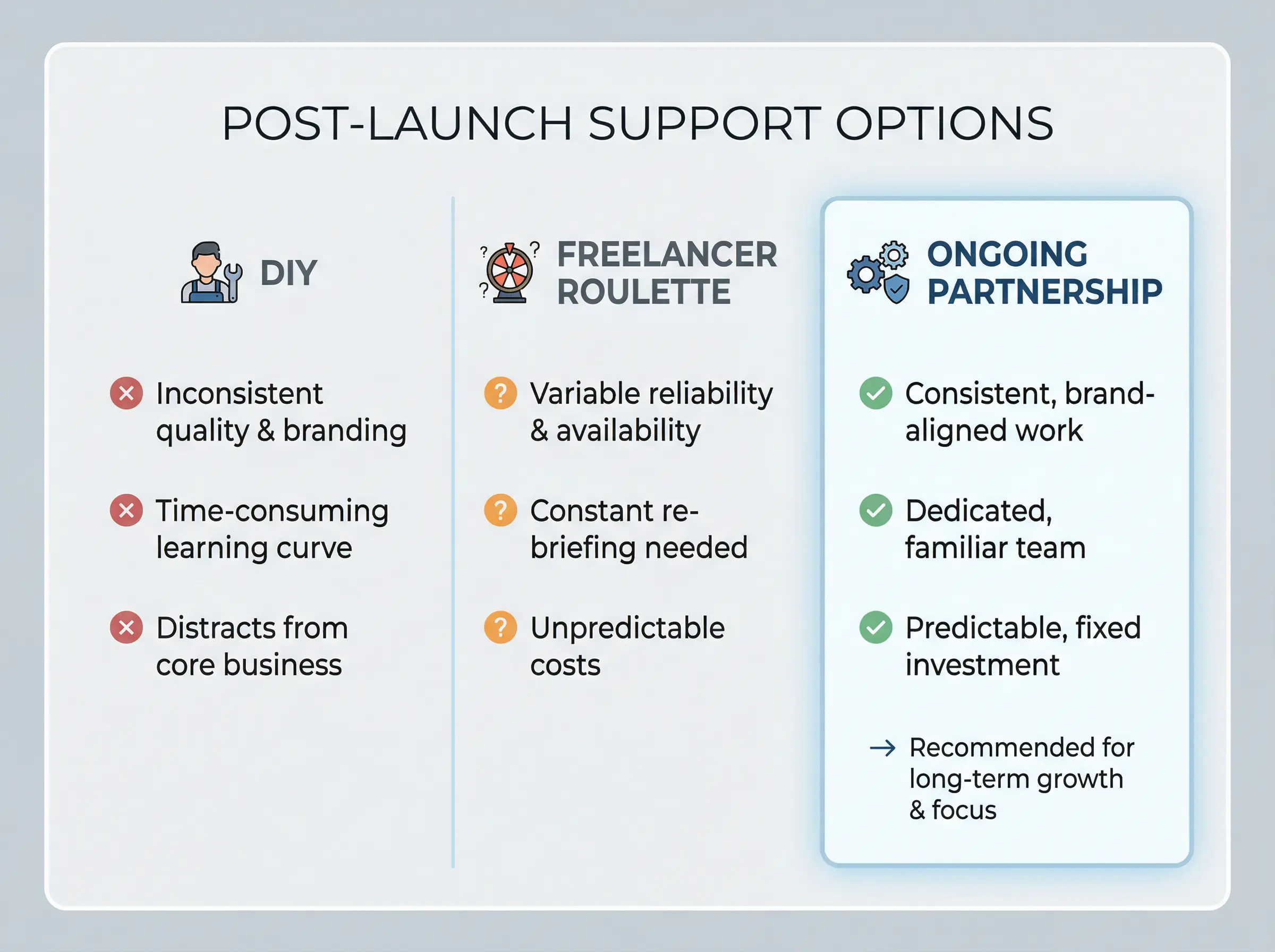
Most businesses don't have a designer on staff. So when they need a new social media graphic, or a sales deck, or an update to the website, they're stuck.
Options at this point:
- Do it yourself (inconsistent quality, time-consuming)
- Hire a freelancer (variable reliability, requires briefing each time)
- Go back to an agency (expensive for small requests)
- Build an ongoing relationship with a studio that already knows your brand
The last option is what we built Next Step™ for. Monthly design and web support from the same team that built your brand in the first place. No re-explaining your business. No hunting for freelancers. No overhead of a full-time hire.
But whatever path you choose, have a plan. The brands that thrive long-term are the ones with a clear answer to: "Who handles this when we need it?"
The Real Measure of Success
A year from now, you won't remember the launch day excitement. You'll remember whether the brand helped you close deals, attract better clients, and feel proud of how you show up in the market.
That only happens if you treat the brand as a living asset. Feed it. Protect it. Use it.
The work doesn't end at launch. That's where it starts.

