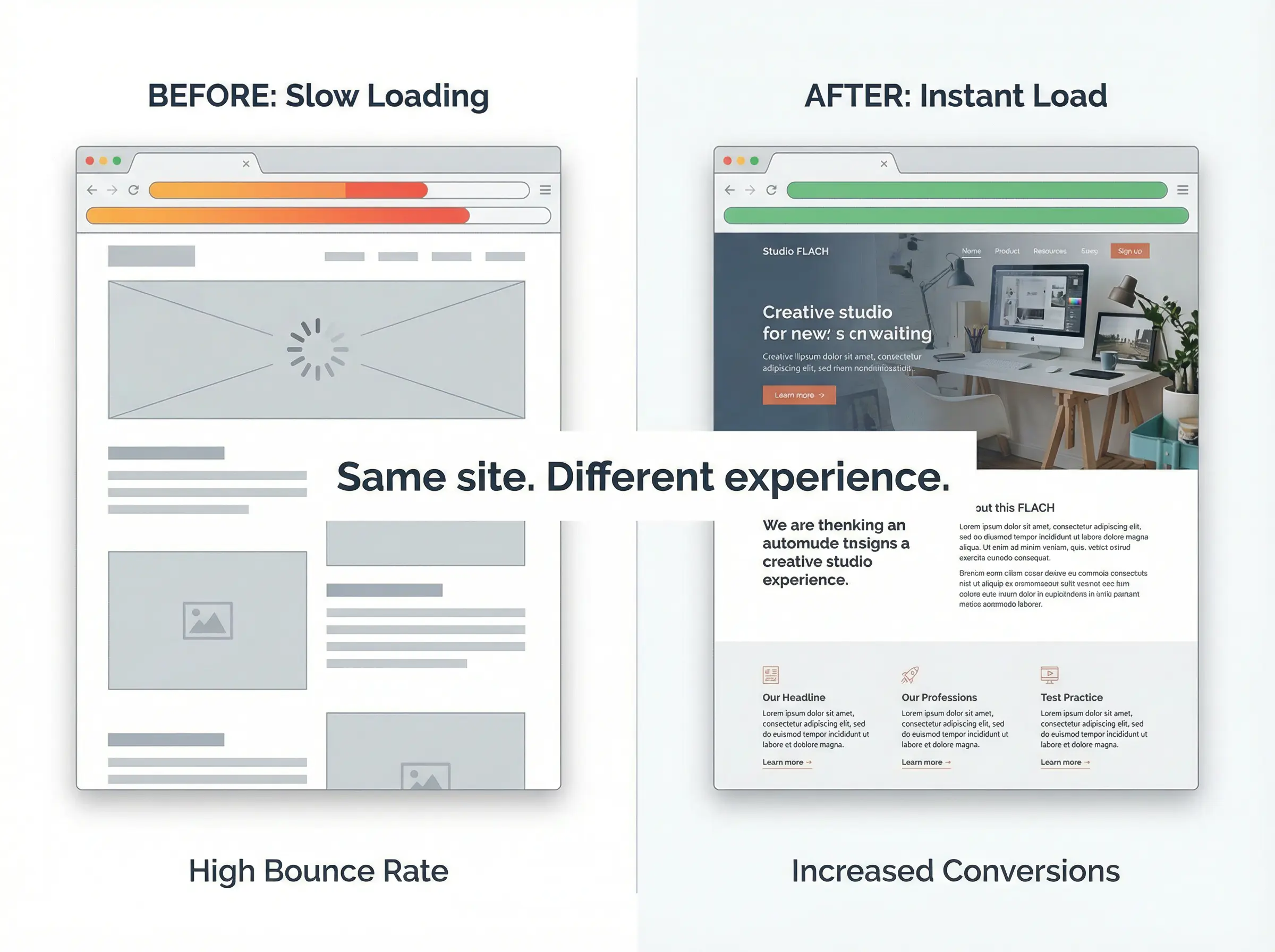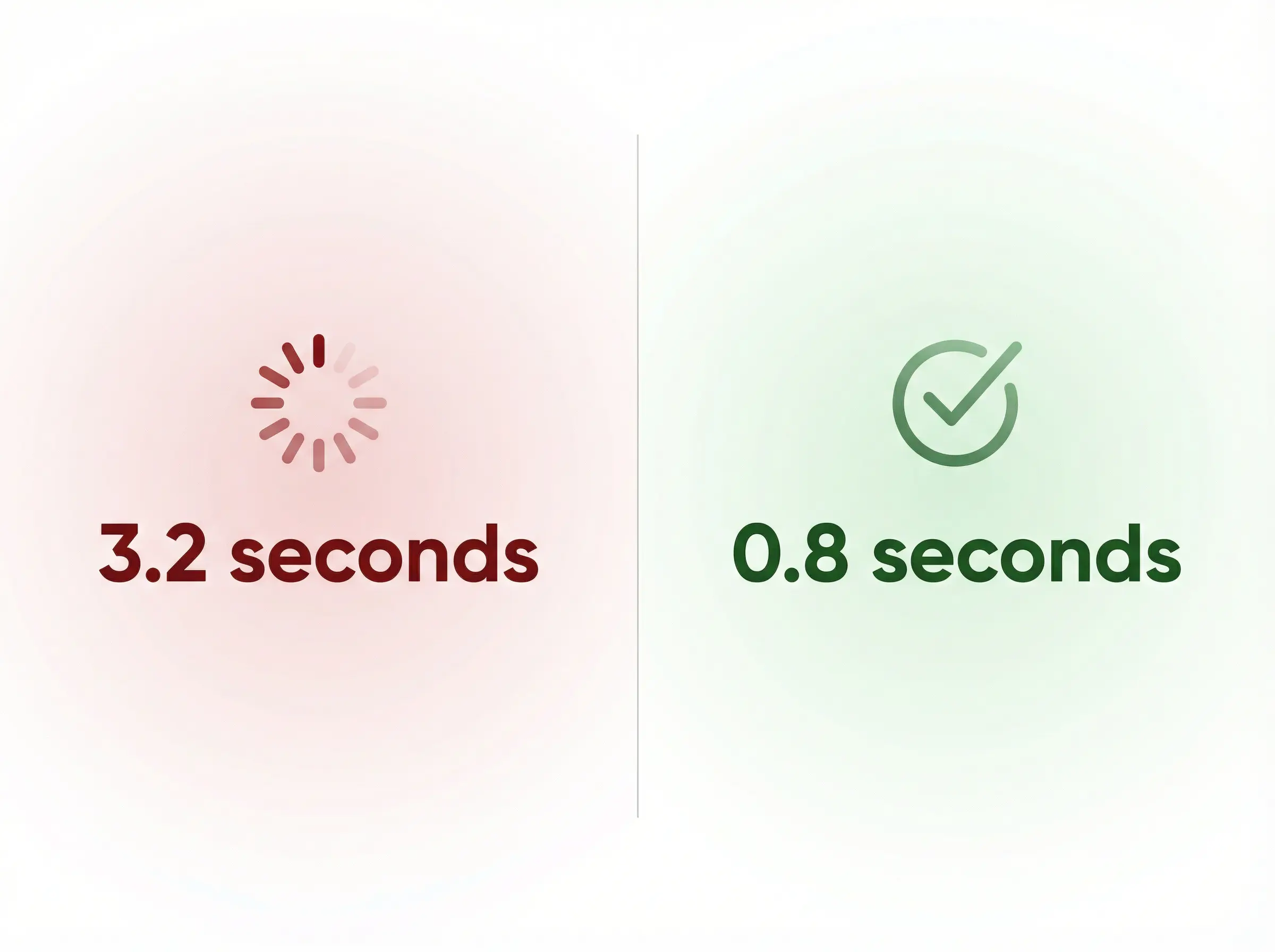
Your website is slower than you think.
Most business owners check their site on a fast office connection, see it load, and assume everything's fine. But your potential clients? They're checking you out on their phones, on spotty wifi, during their commute. And they're not waiting around.
Google's data shows that 53% of mobile users abandon sites that take longer than three seconds to load. Three seconds. That's less time than it took you to read this paragraph.
What a Slow Site Actually Costs You
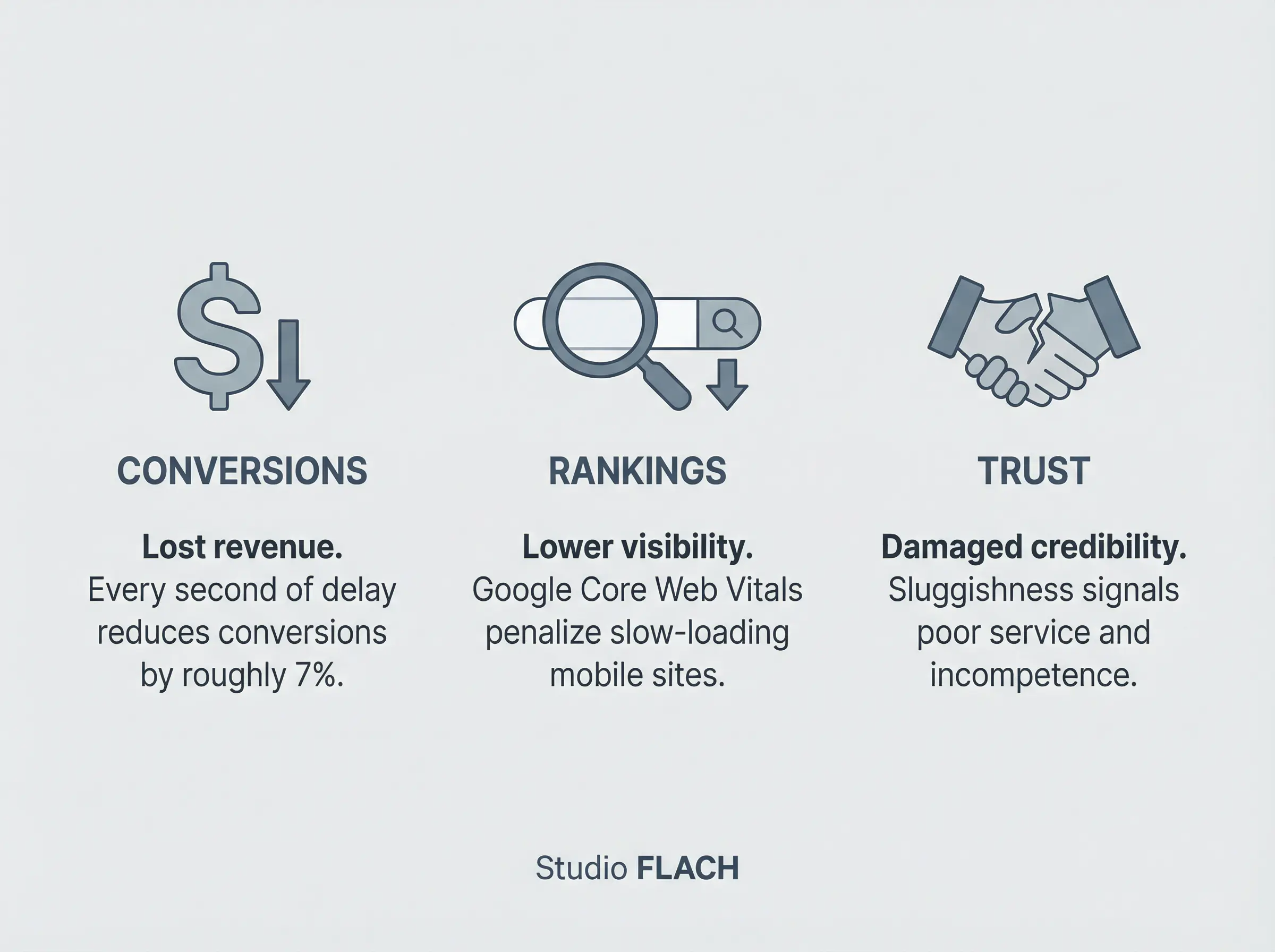
The damage happens in three places:
Lost conversions. Every second of delay reduces conversions by roughly 7%. If your site takes five seconds to load instead of two, you're losing roughly 20% of potential inquiries before visitors even see your headline. That's not a rounding error. That's revenue walking out the door.
Lower search rankings. Google uses page speed as a ranking factor. They've been clear about this since 2018 for mobile searches. Core Web Vitals, which measure visual load speed, layout stability, and interactivity, now influence where you appear in search results. A slow site doesn't just frustrate visitors. It buries you beneath faster competitors.
Damaged trust. This one's harder to measure but easy to feel. When a site loads slowly, visitors assume the worst. "If their website is this clunky, what's their actual service like?" Speed signals competence. Sluggishness signals the opposite.
What's Actually Slowing You Down
Here's what most people get wrong: the problem usually isn't your hosting provider.
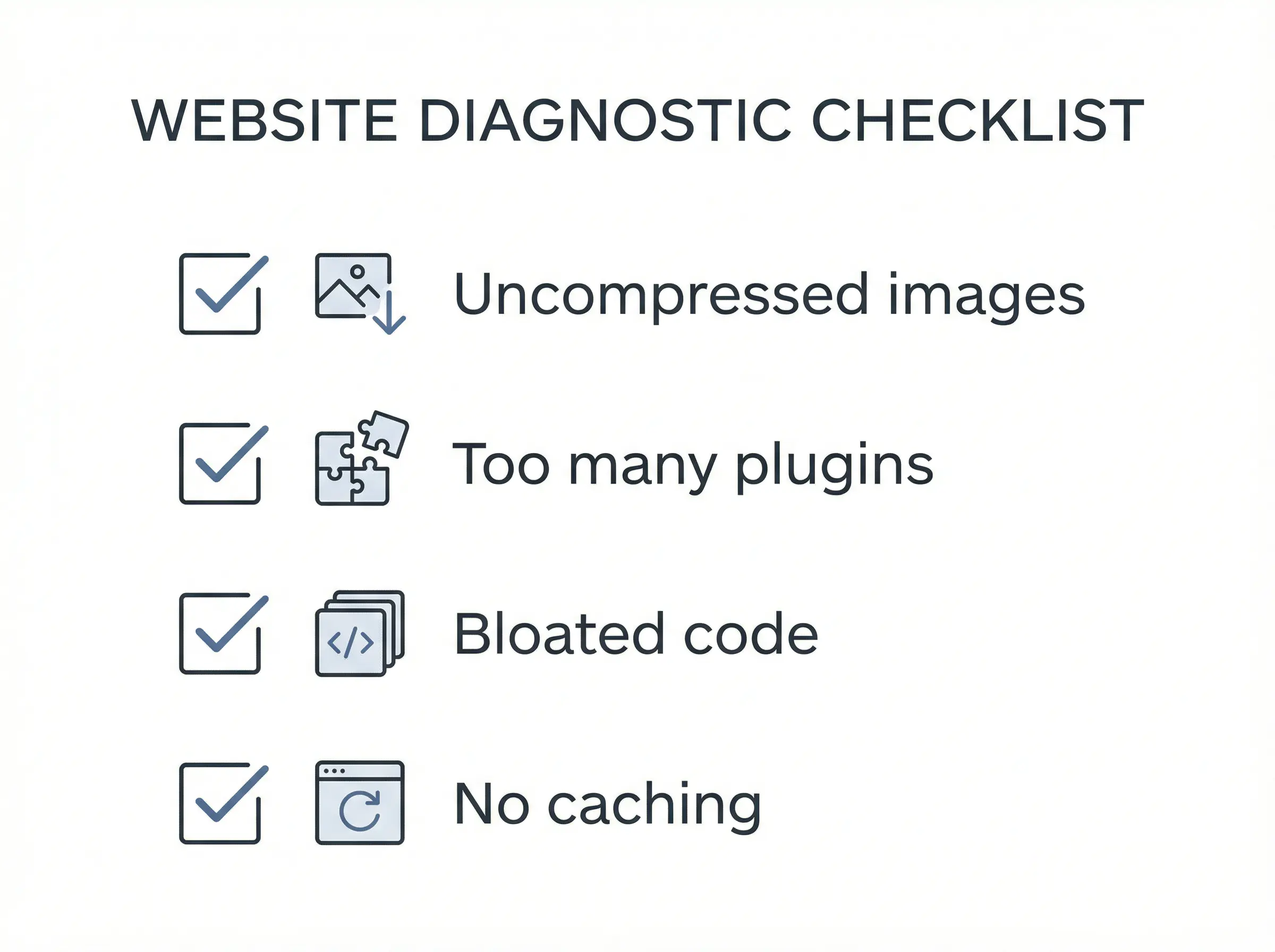
Business owners love to blame their host. It's an easy scapegoat. But switching hosts rarely fixes the real issues. The actual culprits are almost always on the site itself:
Uncompressed images. That beautiful hero photo from your last photoshoot? If it's 4MB instead of 400KB, it's adding seconds to every page load. Modern compression tools can shrink images by 70-80% with no visible quality loss.
Too many plugins or scripts. Every tool you add to your site, whether it's a chat widget, analytics tracker, form builder, or social feed, adds weight. Some of these tools block the rest of the page from loading until they finish. One poorly coded plugin can tank your entire site's performance.
Bloated code. Many website builders and themes come packed with features you'll never use. All that unused code still has to load. It's like driving a truck when you only need a bicycle.
No caching. Without proper caching, your server rebuilds every page from scratch for every visitor. That's wasted work. Caching stores a ready-to-serve version so returning visitors (and even first-timers) get faster load times.
How to Fix It
You don't need to become a developer to make improvements. Start here:
Measure first. Use Google's PageSpeed Insights or GTmetrix to get a baseline score. Pay attention to the specific recommendations. They'll tell you exactly what's dragging you down.
Compress your images. Tools like ShortPixel, TinyPNG, or Squoosh can handle this automatically. Make it part of your process before any image goes on your site.
Audit your plugins and scripts. Remove anything you're not actively using. For the tools you keep, check if they're causing render-blocking issues. Sometimes there's a faster alternative that does the same job.
Enable caching. Most website platforms have built-in caching options or plugins. Turn them on. If you're not sure how, ask your developer.
Consider a CDN. A content delivery network stores copies of your site on servers around the world, serving visitors from whichever server is closest. This matters especially if you have clients in multiple regions.
The Bigger Picture
Speed isn't a technical checkbox. It's a business decision.
A fast website converts better. It ranks higher. It makes a stronger first impression. And it respects your visitors' time, which is the scarcest resource anyone has.
When we build sites through True Space™, performance is baked into every decision. Not as an afterthought, but as a foundation. Because a beautiful site that nobody waits for is just a brochure nobody reads.
If your current site is dragging, you have two options: patch the problems one by one, or build something designed to perform from the start. Either way, the cost of doing nothing keeps compounding.
Your competitors' sites are getting faster. The question is whether yours will keep up.