
You've been here before.
The freelancer seemed perfect. Great portfolio. Reasonable rate. Quick responses in the beginning. Then the project started. Timelines slipped. Communication became sporadic. The final work looked nothing like what you discussed.
So you tried an agency. Professional intake process. Impressive client list. A whole team dedicated to your project. Then the invoice arrived. And you realized you'd been talking to account managers who'd never touched your actual work. The result felt generic. Designed by committee.
Both experiences leave you in the same place: frustrated, behind schedule, and wondering if getting quality creative work done is always this painful.
It doesn't have to be.
The Freelancer Trap
Freelancers offer something genuinely appealing: direct access to talent without corporate overhead. You talk to the person doing the work. Rates stay reasonable. Decisions happen fast.
But the model has structural problems that show up project after project.
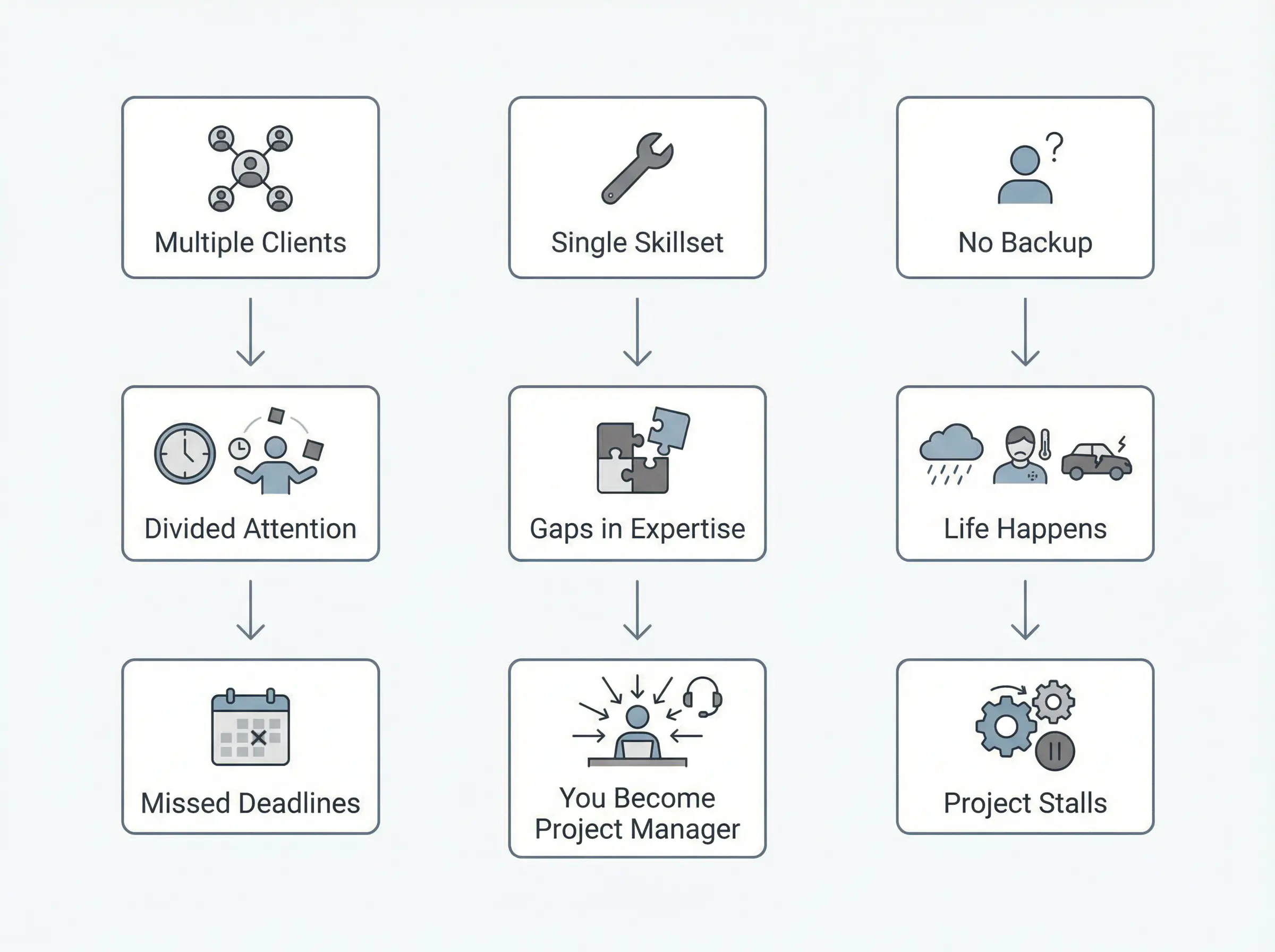
Most freelancers juggle multiple clients to stay afloat. Your project competes with four others for their attention. When a bigger fish calls, your timeline suffers. There's no backup when they get sick, take vacation, or simply get overwhelmed.
The consistency problem runs deeper than availability. A freelancer who's brilliant at logo design might struggle with website strategy. One who writes compelling copy might deliver weak visual concepts. You end up managing multiple freelancers for a single project, becoming the project manager you never wanted to be.
Then there's the accountability gap. When something goes wrong, there's no team to escalate to. No process to fall back on. Just one person who may or may not have the bandwidth to fix it.
The Agency Illusion
Agencies solve some of these problems. They have teams. They have processes. They have resources to throw at tight deadlines.
But they create new problems that often outweigh the solutions.
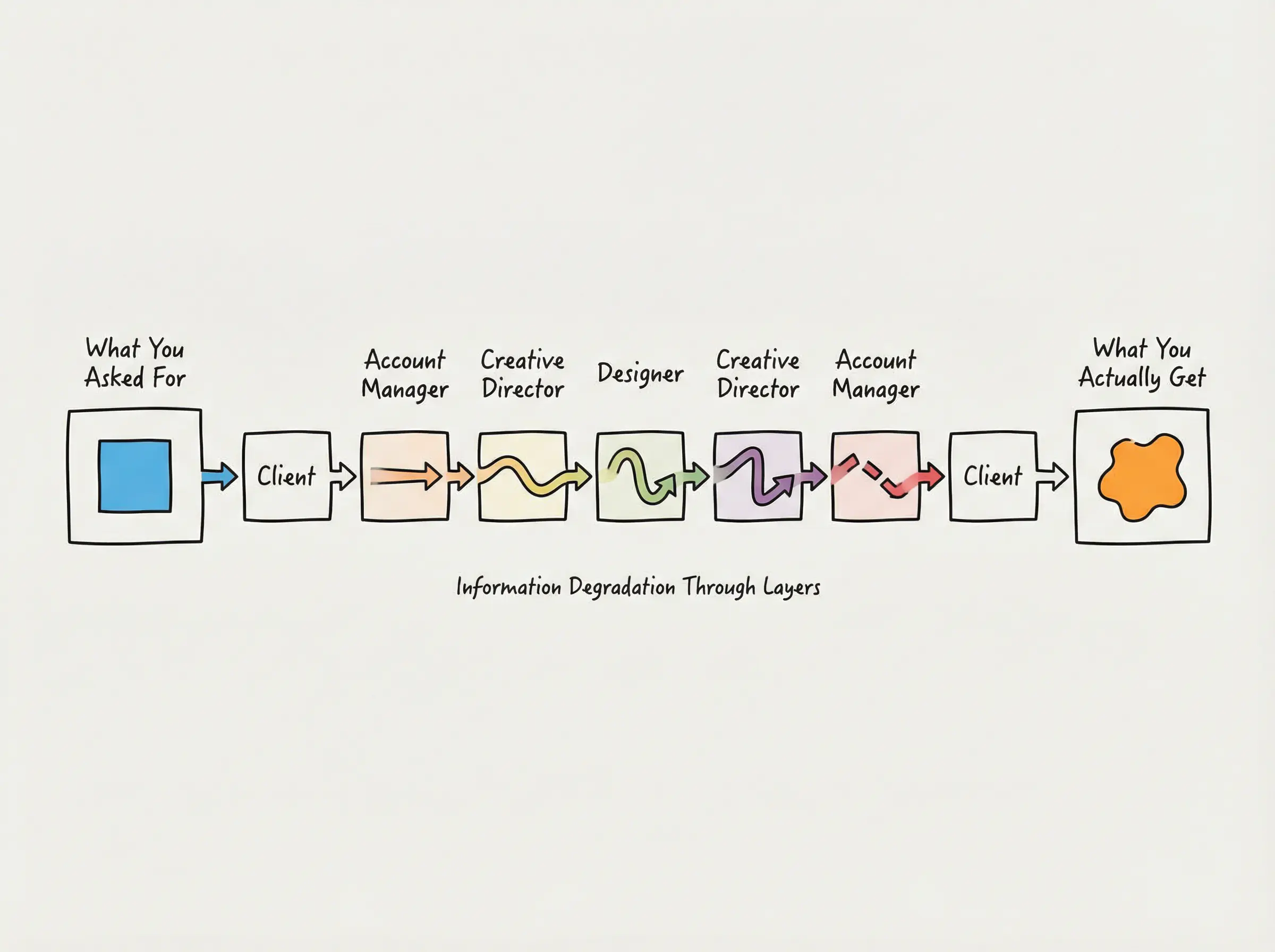
The person who sold you is rarely the person who does your work. Your project gets assigned to whoever's available, not whoever's best suited. Junior designers handle execution while senior talent moves on to the next pitch.
The overhead is real. Office space. Account managers. Business development teams. Project coordinators. Legal departments. All of that gets baked into your invoice. You're paying for infrastructure that doesn't touch your project.
Decision-making slows to a crawl. Every revision cycles through multiple approval layers. Feedback gets filtered through people who weren't in your original conversations. The telephone game produces work that checks boxes but misses the point.
And the pricing? Often opaque. Hourly billing means your budget becomes a moving target. Scope creep benefits the agency, not you. The final number rarely matches the initial estimate.
What Actually Works
There's a third option that most businesses never consider: the focused creative studio.
A studio operates with the directness of a freelancer and the reliability of an agency, without the downsides of either.
Here's what that looks like in practice:
- You talk to the people doing the work. No account managers filtering your feedback. No junior designers executing senior concepts they don't fully understand. The strategist who develops your positioning is the same person who presents it to you.
- Fixed scope means fixed pricing. You know exactly what you're getting and exactly what it costs before anything starts. No hourly billing that incentivizes inefficiency. No surprise invoices. No scope creep that benefits only one side.
- Process creates consistency. A studio that's done this hundreds of times has systems that work. Discovery happens before design. Strategy precedes execution. Revisions follow clear protocols. You're not the guinea pig for someone's experimental workflow.
- Small teams move fast. Without layers of approval, decisions happen in days, not weeks. Feedback loops tighten. Momentum builds instead of stalling.
- Specialization means depth. A studio that focuses on brand and web knows those disciplines cold. They've seen every variation of your problem. They know what works and what doesn't. Generalist agencies spread thin across dozens of service offerings can't match that depth.
The Real Calculation
The choice between freelancer, agency, and studio often comes down to perceived cost. Freelancers look cheap. Agencies look expensive. Studios fall somewhere in between.
But the calculation changes when you factor in hidden costs.
The freelancer who charges half the rate but takes twice as long costs the same. The project that requires three rounds of major revisions because the strategy was weak costs more than getting it right the first time. The website that launches six months late has opportunity costs that dwarf the line item on the invoice.
The real question isn't "what's the lowest number?" It's "what's the fastest path to work that actually performs?"
A business that needs to attract better clients, command higher prices, or enter a new market can't afford to experiment with unreliable partners. The cost of delay exceeds the cost of doing it right.
How to Evaluate Any Creative Partner
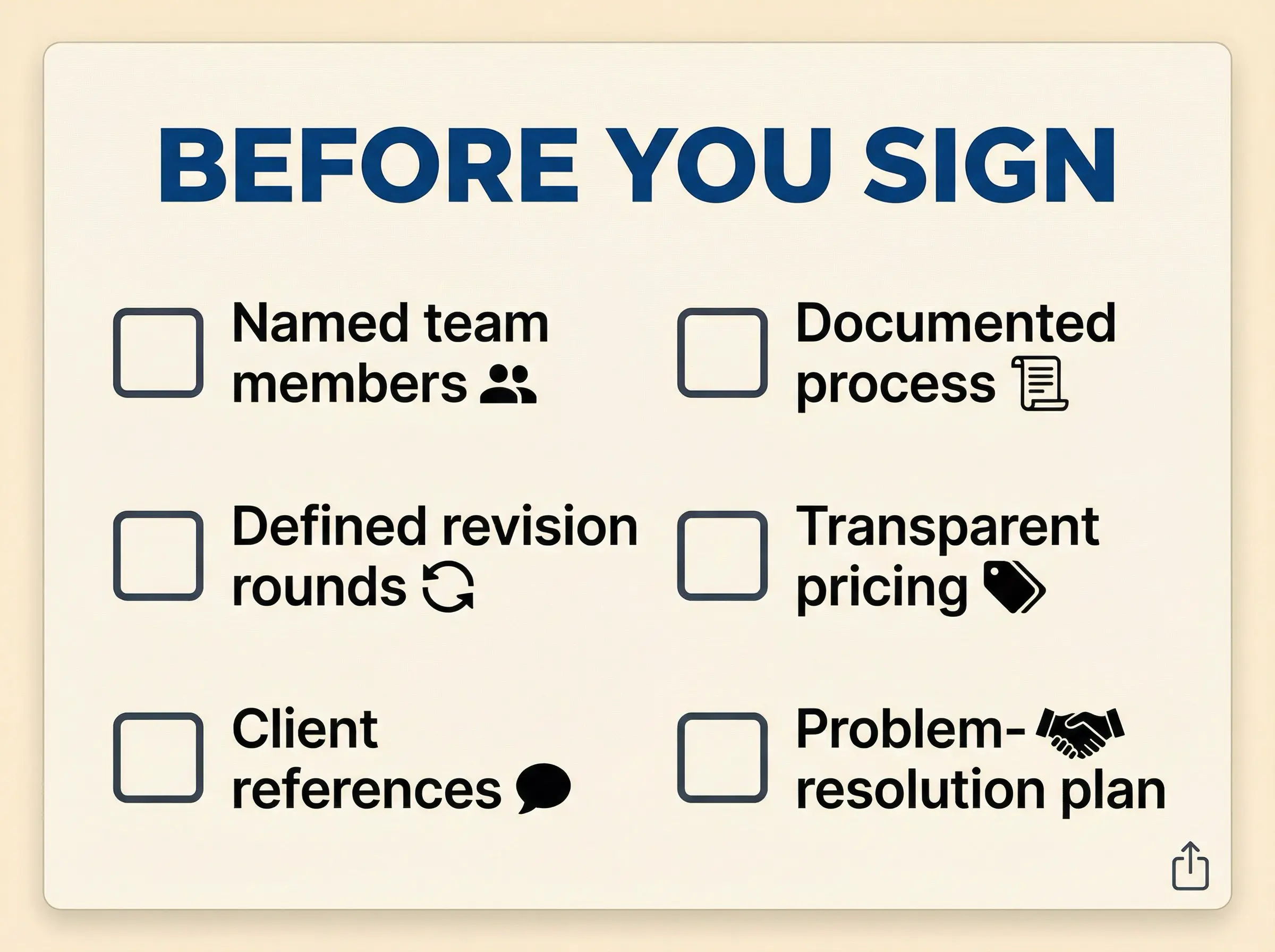
Whether you choose a freelancer, agency, or studio, ask these questions before signing anything:
- Who will actually do my work? Get specific names. Review their portfolios. Understand their role in your project.
- What does your process look like? A clear process indicates experience. Vague answers indicate improvisation.
- How do you handle revisions? Unlimited revisions sounds generous but often signals weak initial strategy. Defined revision rounds indicate confidence.
- What's included in the price? Line-item transparency protects both parties. Bundled pricing often hides surprises.
- Can I talk to recent clients? Testimonials on websites get curated. Actual conversations reveal the real experience.
- What happens if something goes wrong? Every project hits bumps. How a partner handles problems matters more than whether problems occur.
The answers to these questions reveal more than any portfolio or pitch deck. They show you how the relationship will actually work once the contract is signed.
The Path Forward
The creative partner landscape has more options than the binary choice between solo freelancer and corporate agency suggests.
Studios exist specifically to fill the gap: high-end work, direct collaboration, clear deliverables, simple decision-making.
If your current approach isn't working, that's useful information. It means the structure itself might be the problem, not the specific people involved.
The next time you need brand or web work done, consider what you actually need: reliability without bureaucracy, quality without overhead, partnership without the politics.
That middle ground exists. More businesses are finding it.

