You spent months getting it right. Then what?
The brand is polished. The website is live. The launch post got great engagement, your team is excited, and clients are already saying, "Wow, this looks so much more professional."
That feeling lasts about 90 days.
Not because the work was bad. Because the world around it keeps moving, and the brand starts standing still.
This is the part nobody warns you about. The slow, quiet decay that happens when a business treats launch day like a finish line.
What "brand decay" actually looks like
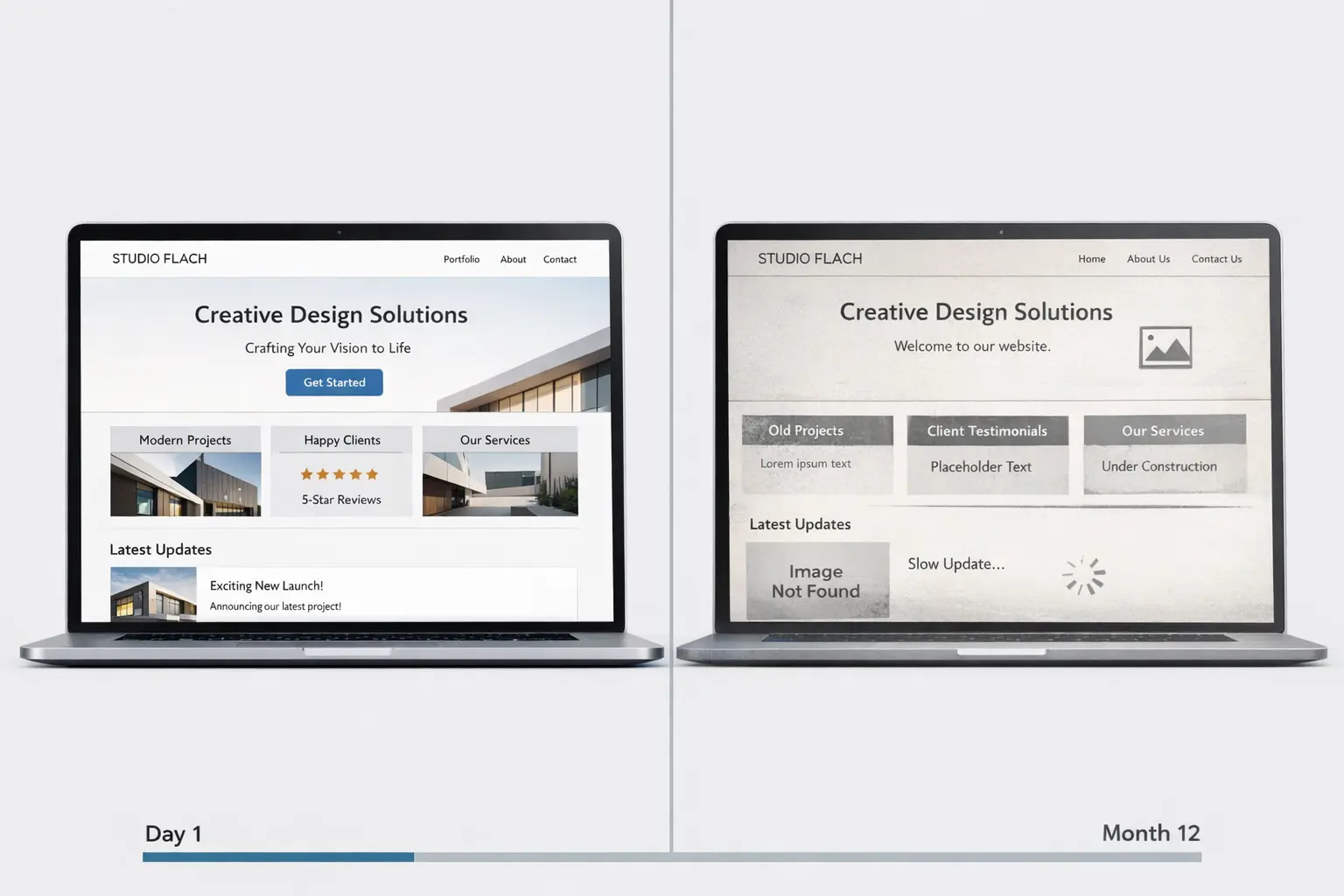
It doesn't happen overnight. That's what makes it dangerous. Here's how it typically shows up:
- Your website content goes stale. The team page still lists someone who left eight months ago. Your services have shifted, but the site still describes the old ones.
- Performance degrades. Page speed drops as plugins go unpatched. Security vulnerabilities pile up. Mobile rendering breaks after a browser update you didn't notice.
- Visual consistency drifts. New hires start making their own templates. Social graphics stop matching the brand guidelines. Fonts get swapped because someone couldn't find the right file.
- Your competitors catch up. They launched a new site last quarter. Yours now looks like it belongs to a previous version of your business.
None of these problems trigger an alarm. They just slowly erode the trust and credibility you paid good money to build.
Why this keeps happening
Two reasons, mostly.
1. The project mindset
Most businesses treat branding and web design as a project with a start date and an end date. Scope, timeline, deliverables, done. The invoice gets paid, the files get handed over, and the agency or freelancer moves on.
That structure makes sense for the build phase. But a brand isn't a building you construct once and walk away from. It's closer to a garden. Leave it alone, and things start growing in directions you didn't plan for.
2. The "we'll handle it in-house" assumption
After launch, someone on the team gets assigned to "keep the website updated." Usually, that person already has a full-time job doing something else. They don't have design training. They don't have access to the original files or a clear sense of the brand system.
So updates get delayed, or they get done in ways that chip away at the quality of the original work.
The most expensive version of brand maintenance is the kind where nobody is officially responsible for it.
What ongoing support actually means
This isn't about paying someone a retainer to sit around waiting for your call. Real ongoing support looks more like this:
Design updates
New campaigns, updated service pages, fresh social templates, seasonal graphics. The kind of work that keeps your brand feeling current without requiring a full redesign every year.
Website maintenance
Software updates, speed monitoring, security patches, broken link checks, mobile testing. The invisible work that keeps your site performing the way it did on launch day.
Strategic check-ins
Periodic reviews of how your brand and site are performing against your actual business goals. Are visitors converting? Is the messaging still accurate? Has something in your market shifted that your brand needs to respond to?
Content and copy changes
Your business evolves. You add services, enter new markets, adjust your positioning. Your website and brand materials need to reflect those changes in real time, not six months later.
The math behind "we'll do it later"
Say your new website generates 30% more qualified leads in its first six months. Strong return on investment. But by month nine, load speed has dropped, the blog hasn't been updated, and your homepage still promotes last quarter's offer.
Traffic starts slipping. Bounce rate climbs. The leads slow down, and nobody connects it back to the website because the decline is gradual.
By the time someone finally says, "We should probably update the site," the fix is no longer a small task. It's a project again. New scope, new budget, new timeline.
The businesses that avoid this cycle are the ones that treat support as a line item, not an afterthought.
How we built Next Step™ around this problem
At Studio FLACH, we created Next Step™ specifically because we watched this pattern repeat with too many clients. A business would invest in a great brand or website, and we'd check in a year later to find it halfway back to where it started.
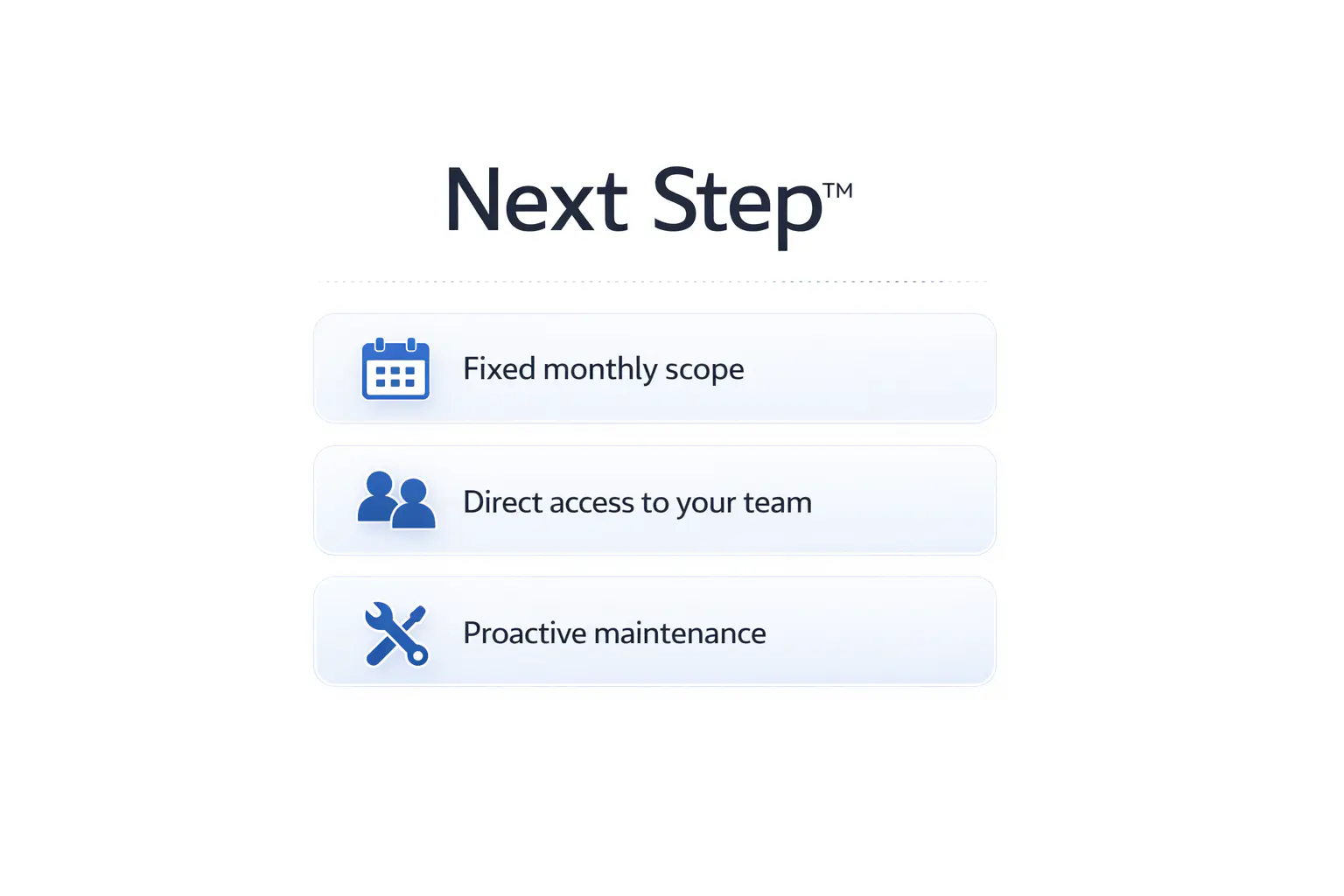
Next Step™ is ongoing design and web support, structured so you get consistent, high-quality updates without hiring an in-house designer or juggling freelancers. Here's how it works:
- Fixed monthly scope. You know exactly what you're getting and what it costs. No surprise invoices.
- Direct access to the team that built your brand. No onboarding a new designer who has to learn your system from scratch.
- Proactive maintenance. We don't wait for something to break. We monitor, update, and flag issues before they become problems.
It's the difference between owning a car and actually servicing it.
The real question to ask after launch
When the site goes live and the brand is in place, the right question isn't "Are we done?"
It's "Who's responsible for keeping this working six months from now?"
If the answer is vague, that's the gap where brand decay starts. Fill it early, and the investment you made in your brand keeps compounding instead of depreciating.

