
A new logo won't fix a broken business.
Neither will a fresh color palette, a redesigned website, or a clever tagline. These are outcomes of good strategy, not substitutes for it.
We've worked with businesses that came to us ready to rebrand. New fonts. New everything. They'd already decided what they needed. But when we asked why, the answers were vague: "It feels outdated." "Our competitors look better." "We just need something fresh."
Those aren't reasons. They're symptoms.
A rebrand is expensive. Not just in dollars, but in time, attention, and the risk of confusing customers who already know you. Before you touch a single pixel, you need clarity on three things.
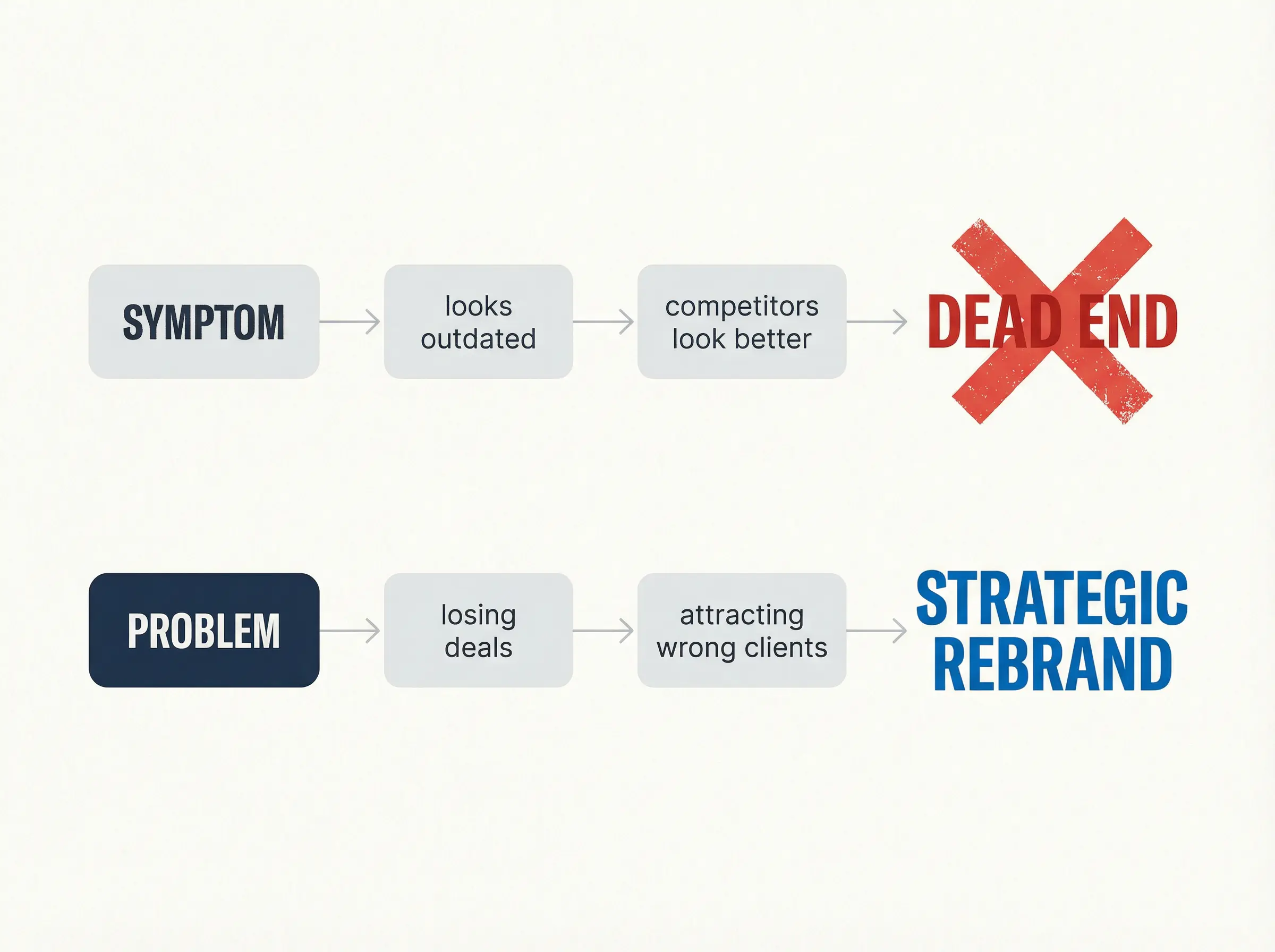
1. What problem are you actually solving?
"Our brand looks old" is not a problem. It's a feeling.
The real question: Is your current brand actively costing you business? Are prospects bouncing because they don't trust what they see? Are you attracting the wrong clients because your positioning is unclear? Are you stuck competing on price because nothing differentiates you?
If you can't point to a specific business problem, you might not need a rebrand. You might need better marketing, a clearer offer, or simply more patience.
One client came to us convinced they needed a complete visual overhaul. After digging into their situation, we found the real issue: their website buried their best work three clicks deep. We restructured their site architecture and rewrote their homepage copy. Same logo. Same colors. Inquiries doubled in 60 days.
A rebrand is surgery. Make sure you're treating the right condition.
2. Who are you trying to reach, and what do they actually care about?

Your brand isn't for you. It's for your customers.
This sounds obvious, but most rebranding conversations start with internal preferences. "I want it to feel more modern." "I've always liked blue." "Can we make it look like Apple?"
None of that matters if it doesn't resonate with the people you're trying to reach.
Before redesigning anything, get specific about your audience:
- Who are your best clients? Not your average clients. Your best ones.
- What did they care about when they chose you?
- What language do they use to describe their problems?
- What would make them trust you faster?
A luxury real estate firm and a budget-friendly home inspection company both serve homebuyers. But their brands should look and sound nothing alike because their audiences have different fears, different aspirations, and different definitions of credibility.
Your rebrand should close the gap between how your best customers perceive value and how your brand communicates it.
3. What's actually working right now?
Rebrands often throw out the good with the bad.
Before you start fresh, audit what's already performing. Which pages on your site convert best? Which services get the most referrals? What do clients say when they recommend you? What visual elements do people recognize and respond to?
Sometimes the best rebrand isn't a revolution. It's a refinement.
We worked with a consulting firm that wanted to completely reinvent their brand. But when we interviewed their clients, a pattern emerged: everyone mentioned their "no-nonsense" approach. That directness was their differentiator. They just weren't leaning into it.
The final brand didn't look radically different. But every element now reinforced that direct, cut-the-fluff positioning. Headlines got shorter. Photography got cleaner. The color palette stayed mostly the same but with sharper contrast.
They didn't need a new identity. They needed their existing identity sharpened.
The decision that saves time and money
Before you commit to a rebrand, write down your answers to these three questions:
- What specific business problem will this rebrand solve?
- Who is this brand for, and what do they need to see to trust us?
- What's already working that we should protect or amplify?
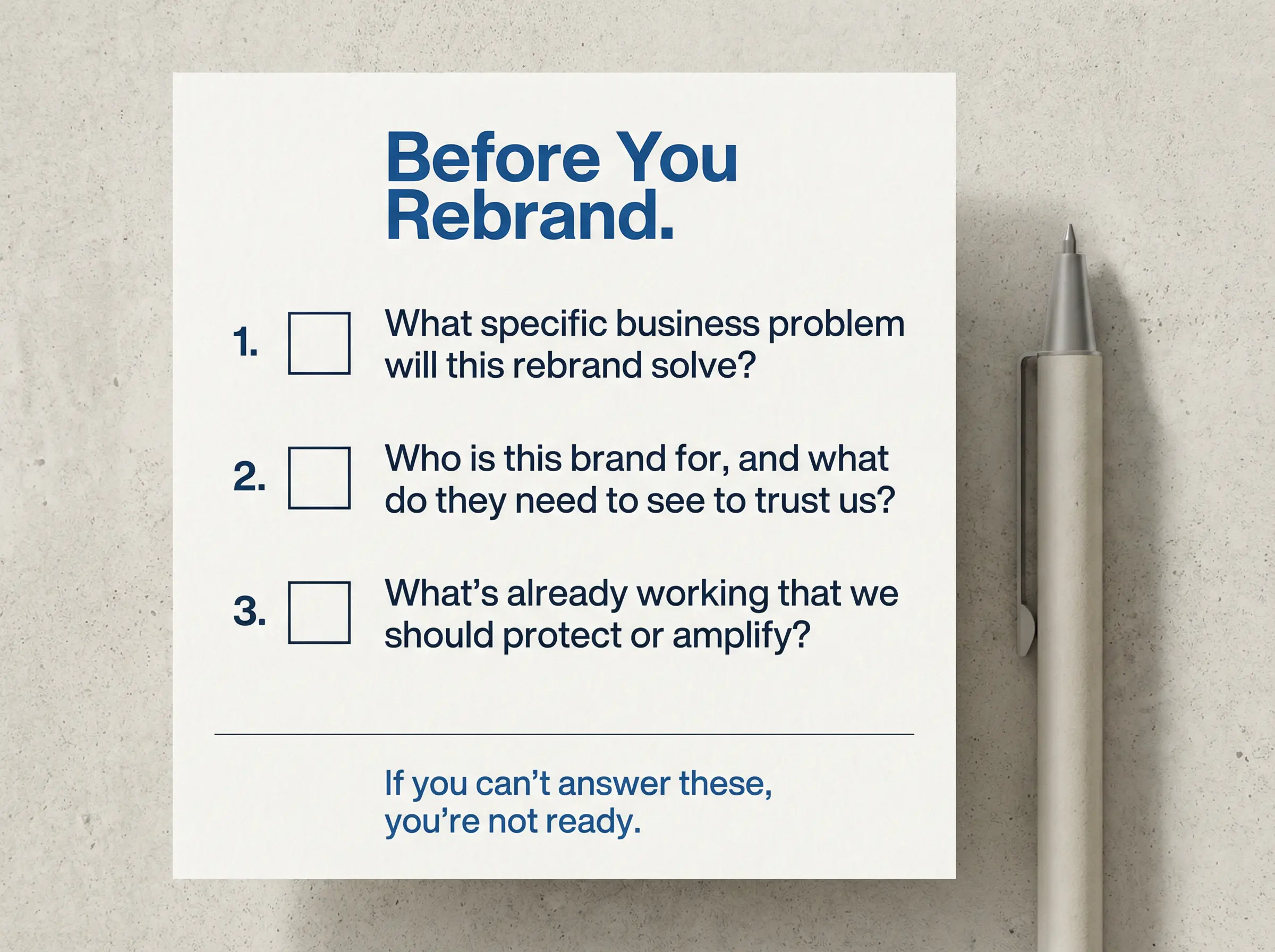
If you struggle to answer them, that's useful information. It means the project isn't ready yet.
This is exactly why we built Strategic Clarity™ as a standalone offer. It's the research and positioning work that should happen before any design begins. Some clients go through it and realize they don't need a rebrand at all. Others come out with a brief so clear that the design process moves twice as fast.
Either way, they save money. And they avoid the regret of launching something beautiful that doesn't perform.
A rebrand should be a business decision, not an aesthetic one. Get the strategy right first.

