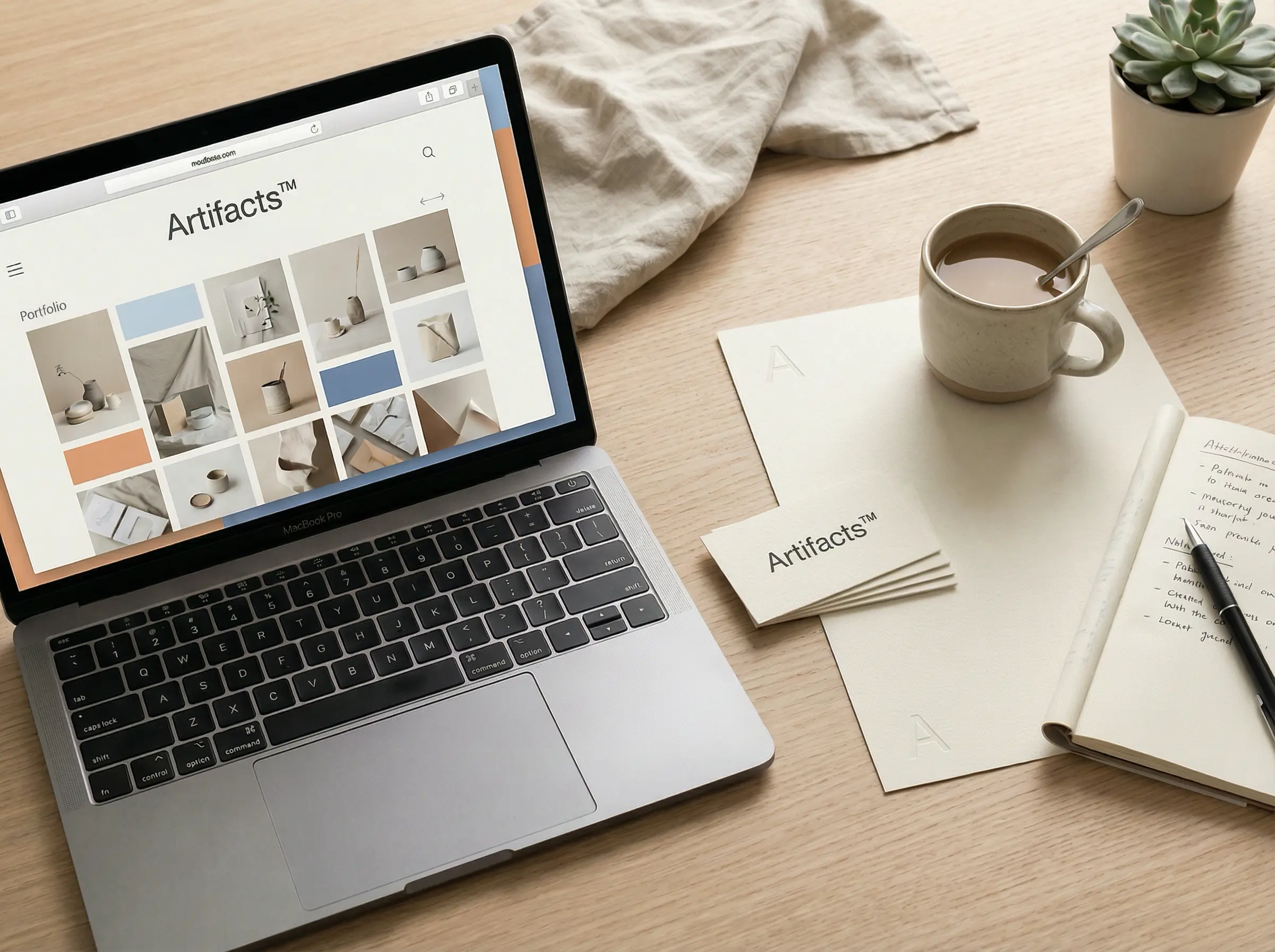
You just launched a new brand identity. Or a website. Maybe both.
The project is done. The invoice is paid. Your designer moves on to the next client.
And then reality sets in.
You need social media graphics for a campaign. Your team requests new email templates. A trade show is coming up, and you need booth signage that matches your new look. Your website needs fresh content pages as you expand your services.
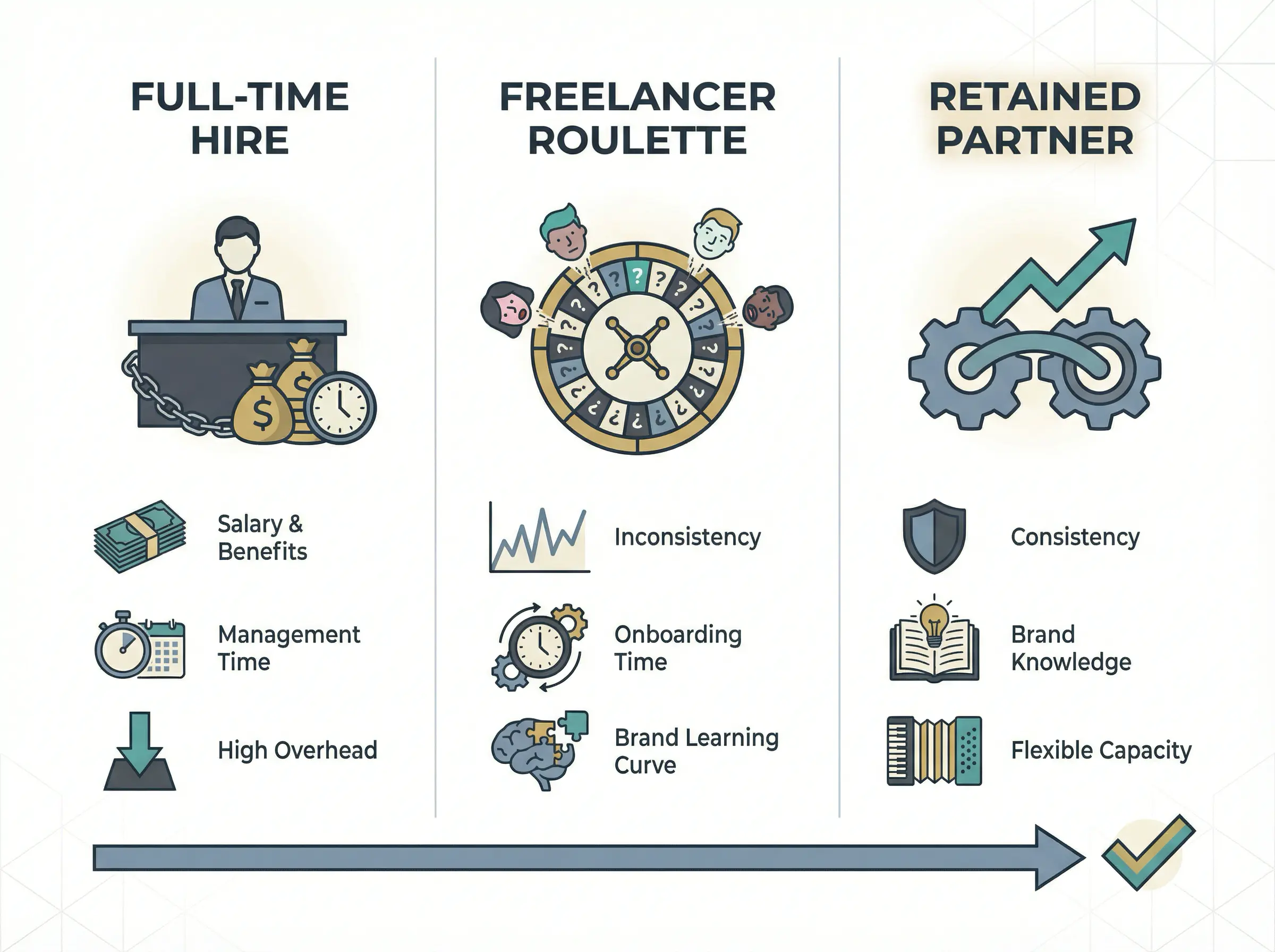
This is the moment most businesses face a difficult choice: hire someone full-time, scramble to find freelancers, or let things slide.
None of these options feel right. A full-time designer costs 50,000 to 80,000 annually before benefits. Freelancers require vetting, onboarding, and hoping they understand your brand. And letting things slide? That's how a cohesive brand slowly falls apart.
There's a middle path.
The Gap Between Launch and Growth
A brand identity or website isn't a finish line. It's a starting point.
The businesses that get the most value from their design investment are the ones who keep building on it. They update their website as their offerings evolve. They create fresh collateral for new opportunities. They refine their messaging based on what they learn from customers.
But most design relationships aren't built for this. They're built for projects with clear start and end dates. Once the final files are delivered, you're on your own.
This creates a gap. You have a brand system designed to be flexible and expandable, but no one to help you use it. You have a website built to convert, but no one to optimize it based on performance data.
The gap grows wider over time. Small inconsistencies creep in. Opportunities pass because you can't move fast enough. The brand that felt so sharp at launch starts to feel neglected.
What Ongoing Support Actually Looks Like
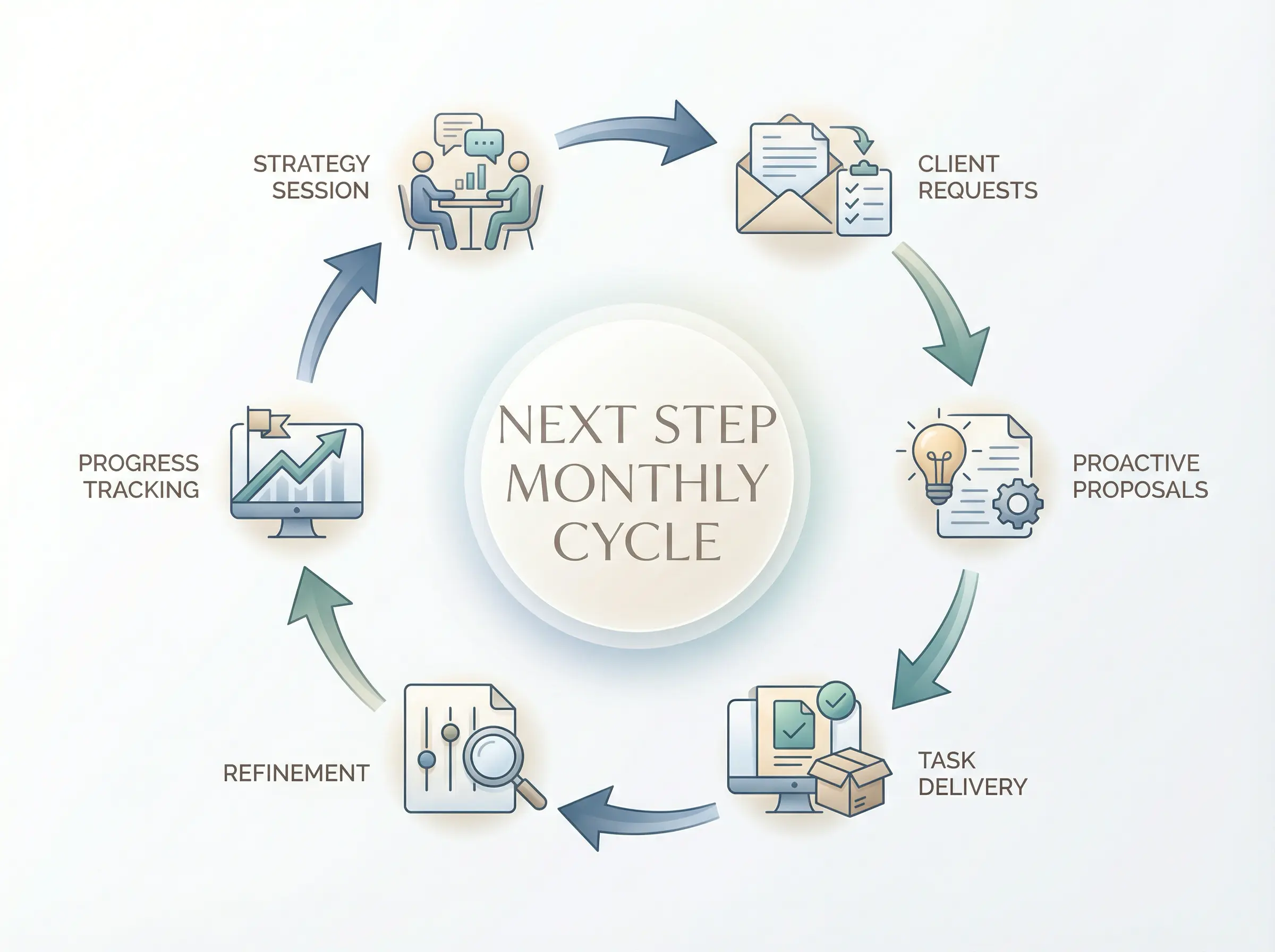
The concept is simple: a consistent design partner who knows your brand and is ready when you need them.
At Studio FLACH, we call this Next Step. Here's how it works in practice.
The Monthly Rhythm
Each month starts with a strategy session. We align on your priorities, upcoming needs, and any ideas we've noticed that could move your business forward. This keeps work focused on what matters most.
From there, you share requests as they come up:
- Marketing materials for a new service
- Updates to your website pricing page
- A presentation deck for an investor meeting
- Social media templates your team can use
Proactive Partnership
We also bring ideas to you. Based on what we see in your industry and your analytics, we suggest updates, campaigns, or improvements you might not have considered.
You're not just getting execution. You're getting a strategic perspective.
Fast Turnaround
Most requests are completed within 24 to 48 hours. You review, we refine based on your feedback, and the work is done.
No hiring process. No benefits packages. No hoping the freelancer you found understands your brand guidelines.
When It Makes Sense (And When It Doesn't)
Ongoing design support isn't right for every business.
If you have occasional, unpredictable design needs, project-based work might serve you better. If your needs are extensive enough to keep a designer busy 40 hours a week, hiring in-house could be more cost-effective.
But for businesses in the middle, retained support often makes the most sense. You need consistent design work. You need it done well. You need it done by someone who already understands your brand.
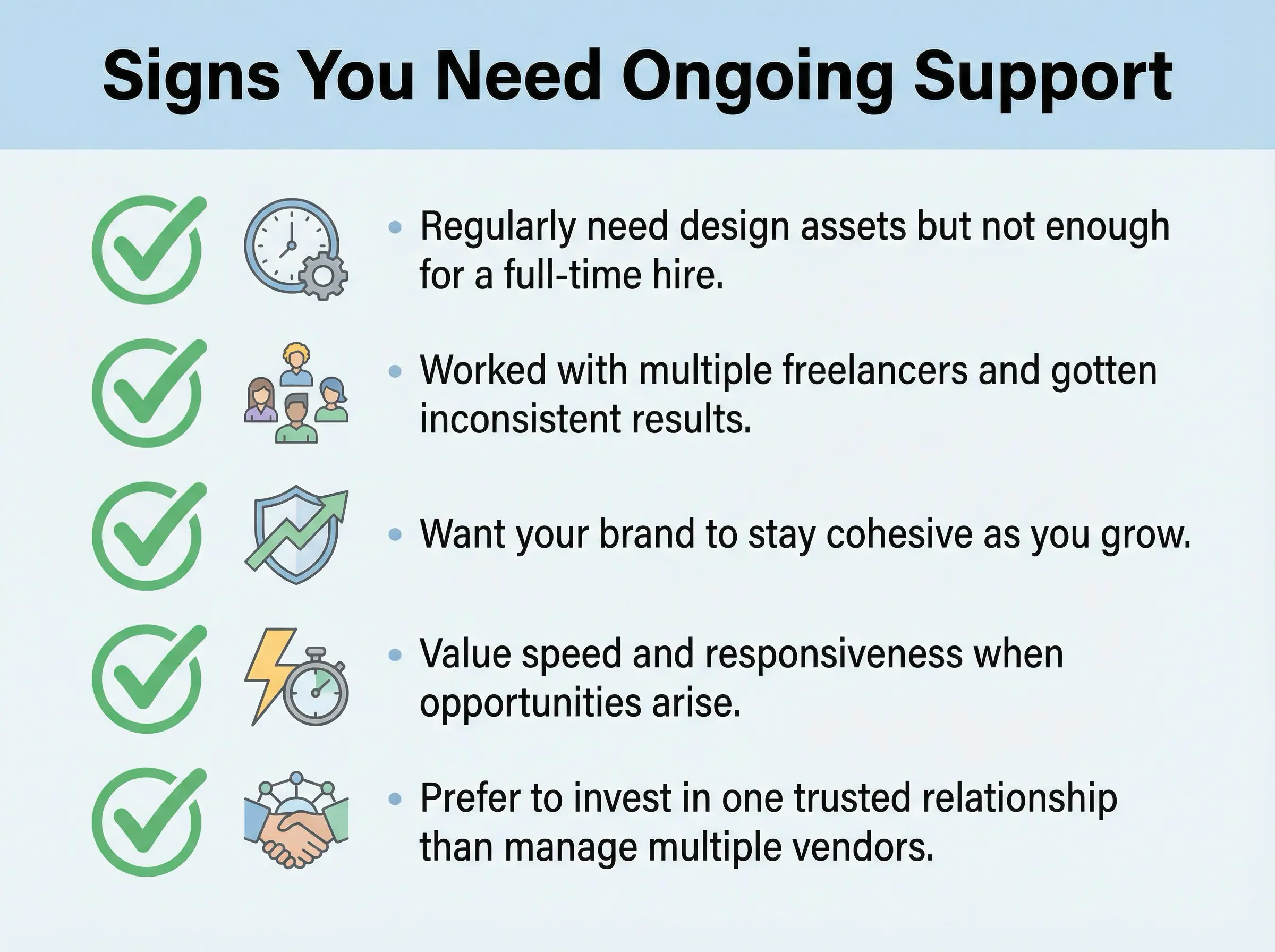
Signs You Might Be a Good Fit
- You regularly need design assets but not enough to justify a full-time hire
- You've worked with multiple freelancers and gotten inconsistent results
- You want your brand to stay cohesive as you grow
- You value speed and responsiveness when opportunities arise
- You'd rather invest in one trusted relationship than manage multiple vendors
The Hidden Cost of Doing It Yourself
Many business owners try to handle design tasks themselves. They use Canva. They tweak their own website. They create "good enough" materials to save money.
This approach has real costs, even if they don't show up on an invoice.
Your Time Has Value
Hours spent wrestling with design software are hours not spent on sales, strategy, or client work. For most business owners, this trade-off doesn't make financial sense.
Quality Matters More Than You Think
Customers form impressions in milliseconds. A slightly off logo placement, an amateur-looking social graphic, a website section that feels dated. These small details shape how people perceive your credibility.
Consistency Requires Expertise
A brand system has rules for a reason. Colors, typography, spacing, hierarchy. When you don't know the rules, you can't follow them. And when the rules break down, the brand breaks down with it.
What to Look for in a Support Partner
Not all ongoing design support is created equal. Some agencies offer retainers that feel like a loose promise with unclear deliverables. Some freelancers take on retainer clients but treat them as low priority.
Here's what to consider when evaluating options:
1. Do They Know Your Brand?
The best scenario is continuing with whoever built your brand in the first place. They understand the system. They know the reasoning behind design decisions. They can execute quickly because there's no learning curve.
2. Is the Scope Clear?
Understand what's included and what isn't:
- How many requests per month?
- What types of work are covered?
- What's the turnaround time?
Vague retainers lead to frustration on both sides.
3. Is Communication Structured?
Regular check-ins keep work aligned with your priorities. Without them, you're just submitting requests into a void and hoping for the best.
4. Can You Pause or Adjust?
Business needs change. A good support arrangement should have flexibility built in. If you have a slow month, you shouldn't be locked into paying for work you don't need.
Making the Investment Work
Design support is an investment, and like any investment, returns depend on how you use it.
Plan Ahead
Share your marketing calendar. Tell your design partner about upcoming launches, campaigns, and events. The more context they have, the better they can anticipate your needs.
Use the Proactive Recommendations
A good partner won't just wait for requests. They'll suggest improvements based on what they observe. Take these suggestions seriously. They often spot opportunities you're too close to see.
Build a Library of Assets
Over time, your retained work creates a collection of templates, graphics, and materials your team can use independently. This compounds the value of your investment.
Think Beyond the Immediate Request
When you ask for a social media graphic, consider whether you need a template you can adapt for future posts. When you update a website page, consider whether similar updates are needed elsewhere. Strategic thinking multiplies the impact of each task.
The Bottom Line
Growing businesses need design support. The question is how to get it without the overhead of full-time staff or the inconsistency of ad-hoc freelancers.
Ongoing design support fills this gap. It gives you a trusted partner who knows your brand, responds quickly, and helps you maintain the quality that earned trust in the first place.
Your brand isn't a project that ends. It's an asset that grows. The right support helps it grow well.

