
Your Business Grew. Did Your Brand Keep Up?
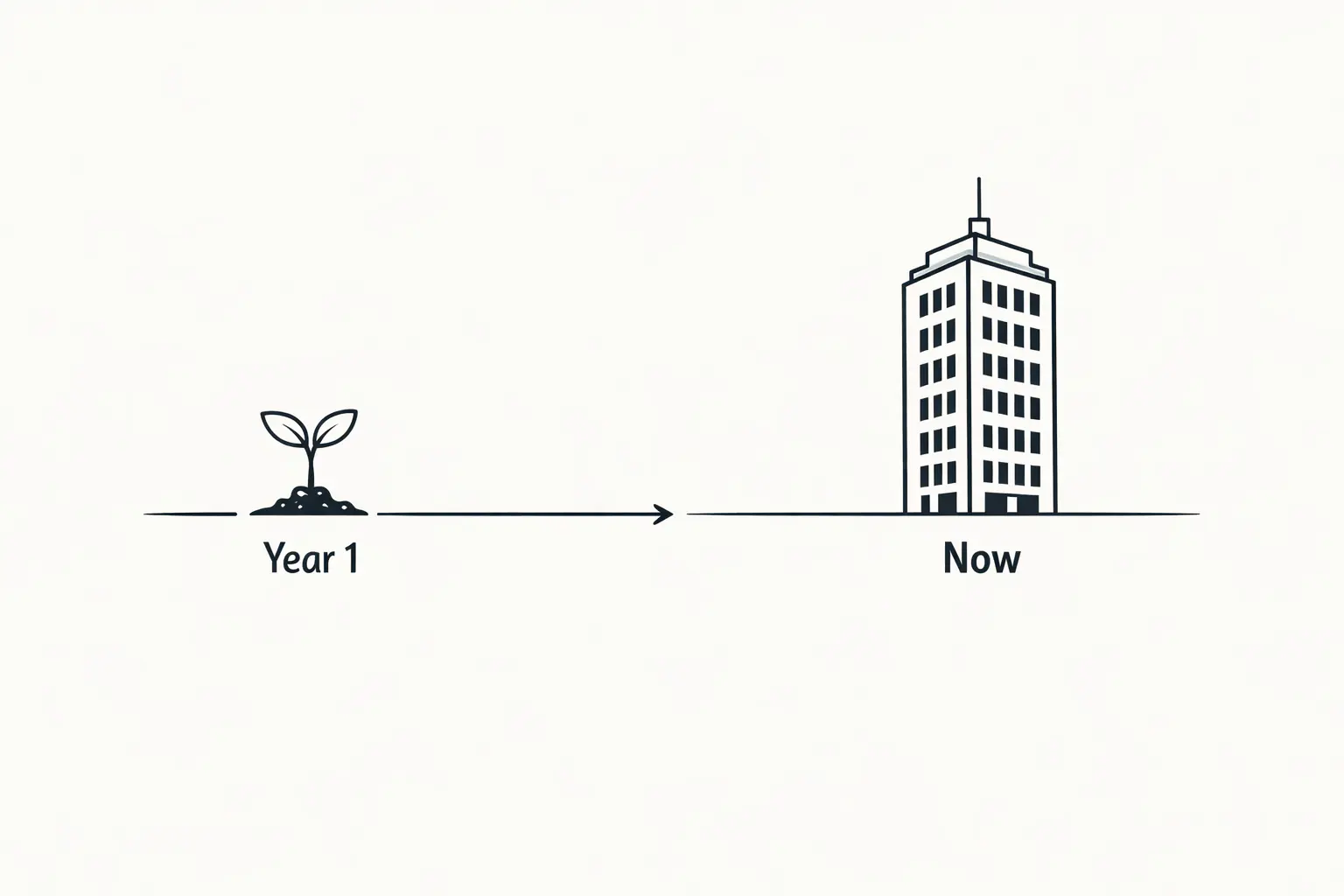
Most businesses don't rebrand because something went wrong. They rebrand because something went right.
The company landed bigger clients. The team doubled. The service offering matured. Revenue crossed a threshold that would've seemed absurd three years ago. And somewhere in the middle of all that growth, the brand stayed exactly where it was.
This is one of the most common problems we see at Studio FLACH, and it almost never announces itself loudly. It shows up as a slow, quiet drag on credibility. A prospect visits your website and assumes you're smaller than you are. A referral partner hesitates before making an introduction. A potential hire Googles your company and gets an impression that feels two versions behind the real thing.
The gap between where your business is and where your brand appears to be isn't just cosmetic. It costs money, opportunities, and momentum.
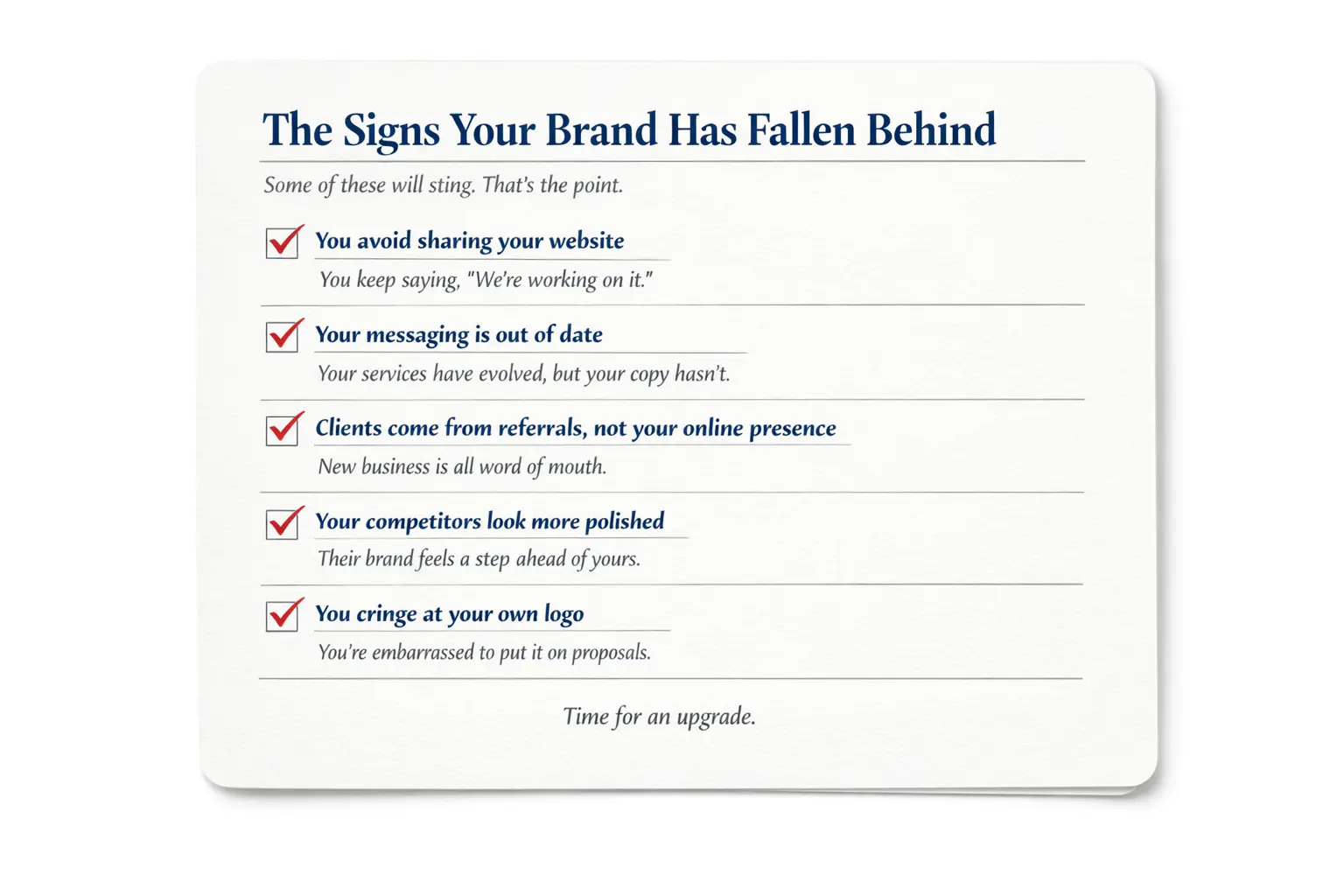
The Signs Your Brand Has Fallen Behind
Some of these will sting. That's the point.
You've stopped sharing your website
When someone asks for your link, there's a half-second pause. Maybe you add a disclaimer: "We're working on updating it." Maybe you just send the Instagram page instead.
If you're hesitant to send people to your own website, that tells you everything you need to know.
Your services have changed, but your messaging hasn't
You stopped offering that entry-level package eight months ago. You added a consulting tier that now accounts for 40% of revenue. But the website still reads like a version of your business that no longer exists.
Outdated messaging doesn't just confuse prospects. It attracts the wrong ones and filters out the right ones.
You're winning business despite your brand, not because of it
This one is tricky because it feels like a good problem. Referrals keep coming. The work speaks for itself. But every new client is coming in through personal connections or word of mouth, and almost none are finding you through your online presence.
That works until it doesn't. And when the referral pipeline slows down (it always does, eventually), the brand needs to do the heavy lifting on its own.
Your competitors look more established than you
You know your work is better. You know your client experience is stronger. But side by side, their brand looks like it belongs in a different league. Visual credibility matters, especially when a prospect is comparing two options they've never worked with before.
You cringe at your own logo on a proposal
If your brand materials make you wince when you attach them to a pitch, the people receiving those pitches are probably having a similar reaction.
Why This Happens (and Why It's Normal)
Brands don't expire on a set schedule. But businesses that grow fast tend to outpace their brand within two to four years. Here's why:
- Early-stage branding solves a different problem. When you're starting out, the brand just needs to look credible enough to get in the door. It's built for survival, not scale.
- Growth shifts your audience. The clients you serve now may be in a completely different category than the ones you started with. What spoke to the first group often misses the second.
- Your own standards change. You've seen more. You know more about your market. What felt right at launch now feels generic or unfocused.
None of this means the original brand was bad. It means the business moved, and the brand didn't move with it.
The Real Cost of Waiting
Putting off a rebrand is easy to justify. There's always a busier quarter ahead, a bigger priority on the table, a voice in the back of your head that says "it's fine for now."
But the cost of a mismatched brand compounds quietly:
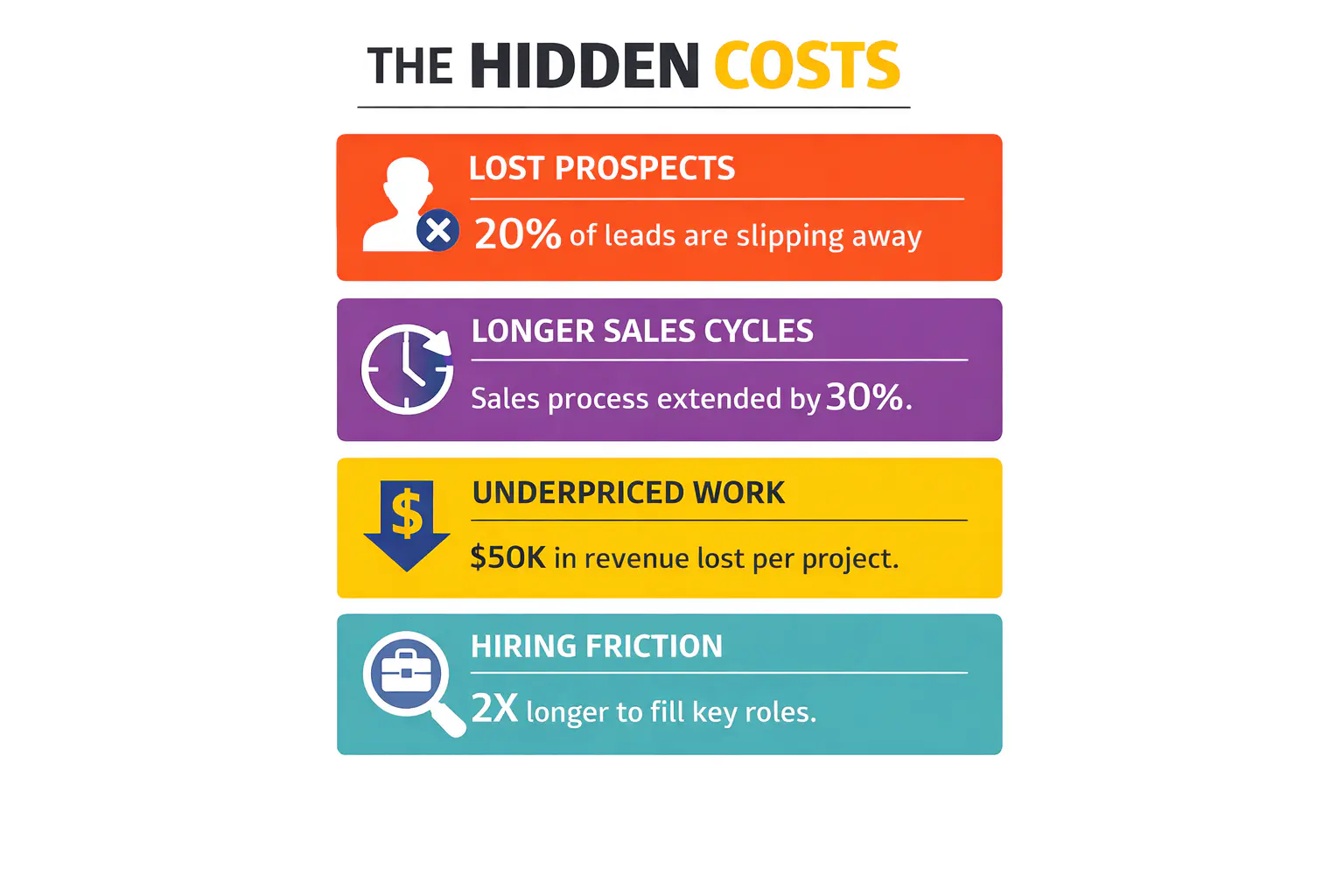
- Lost prospects who never reach out. They visited your site, made a snap judgment, and moved on. You'll never see that data.
- Longer sales cycles. When the brand doesn't do its job up front, every conversation requires more convincing, more proof, more reassurance.
- Underpriced work. A dated brand makes it harder to justify premium pricing, even when the work itself is premium.
- Hiring friction. Strong candidates research your company before applying. A brand that looks behind the times signals the same about the company culture.
The longer the gap between business and brand, the more expensive it becomes to close.
What a Brand That Fits Actually Looks Like
A brand that matches your business doesn't need to be flashy or trendy. It needs to do four things:
- Reflect your current positioning. Who you serve, what you do, and why it matters should be obvious within seconds.
- Signal the right level of credibility. A prospect's first impression should match the experience of actually working with you.
- Support your pricing. The brand should make your rates feel expected, not surprising.
- Work across every touchpoint. From your website to a proposal PDF to a LinkedIn profile photo, the brand should feel consistent and intentional.
"A good brand doesn't just look right. It makes everything else in the business work a little easier."
When those four things are in place, the brand stops being something you think about and starts being something that works for you in the background.
A Quick Self-Assessment for Q1
If you want a simple read on where your brand stands, answer these honestly:
- Does your website accurately describe what you offer today?
- Would you confidently send your homepage to your biggest dream client right now?
- Does your visual identity feel consistent across your website, social media, proposals, and email signature?
- When was the last time you updated your brand messaging?
- Do prospects ever seem surprised (positively or negatively) when they move from your online presence to an actual conversation with you?
If more than two of those gave you pause, the gap is probably wider than you think.
What Comes Next
A rebrand doesn't have to mean starting from scratch. Sometimes the foundation is solid and the business just needs sharper positioning, a refined visual identity, and a website that actually reflects the company as it exists today.
At Studio FLACH, we start every project with research and strategic positioning before anything visual gets designed. That way, the brand isn't built on assumptions or aesthetics alone. It's built on how the business actually wins clients.
If your brand feels like it belongs to a past version of your company, Q1 is a good time to fix that. The longer you wait, the wider the gap gets.

