
The question comes up more often than you'd expect.
A business owner looks at their website, their logo, their marketing materials. Something feels off. Dated, maybe. Or just not quite right anymore. The instinct is to tear it all down and start fresh.
Sometimes that's the right call. Often, it isn't.
The difference between a rebrand and a refresh isn't just scope or budget. It's about diagnosing the actual problem before prescribing a solution.
What a Refresh Actually Means
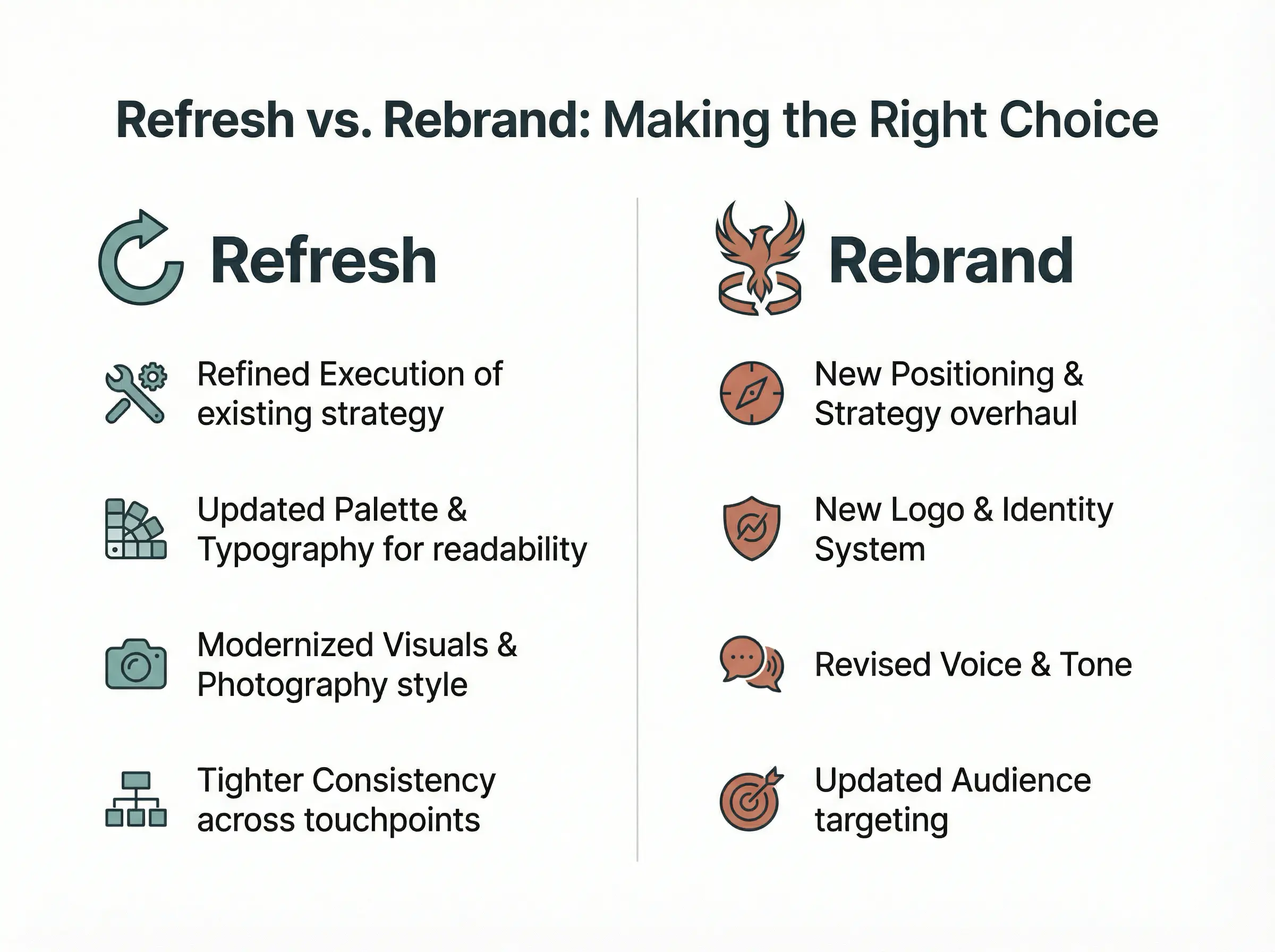
A brand refresh updates visual elements while keeping your foundation intact. Same core identity. Same positioning. Same fundamental message.
Think of it as tuning an instrument rather than buying a new one.
Refresh work typically includes:
- Updated color palette (same family, refined application)
- Typography improvements for better readability
- Cleaned-up logo execution without changing the mark itself
- Modernized photography or illustration style
- Tighter consistency across touchpoints
The bones stay the same. The skin gets healthier.
What a Rebrand Actually Means
A rebrand transforms your foundation. New positioning. New visual identity. Sometimes a new name. This is reconstruction, not renovation.
Rebrand work typically includes:
- Strategic repositioning and messaging overhaul
- New logo and visual identity system
- Revised brand voice and tone
- Updated audience targeting
- Complete asset replacement across all channels
The bones change. Everything built on top of them changes too.
Five Questions to Diagnose Your Situation
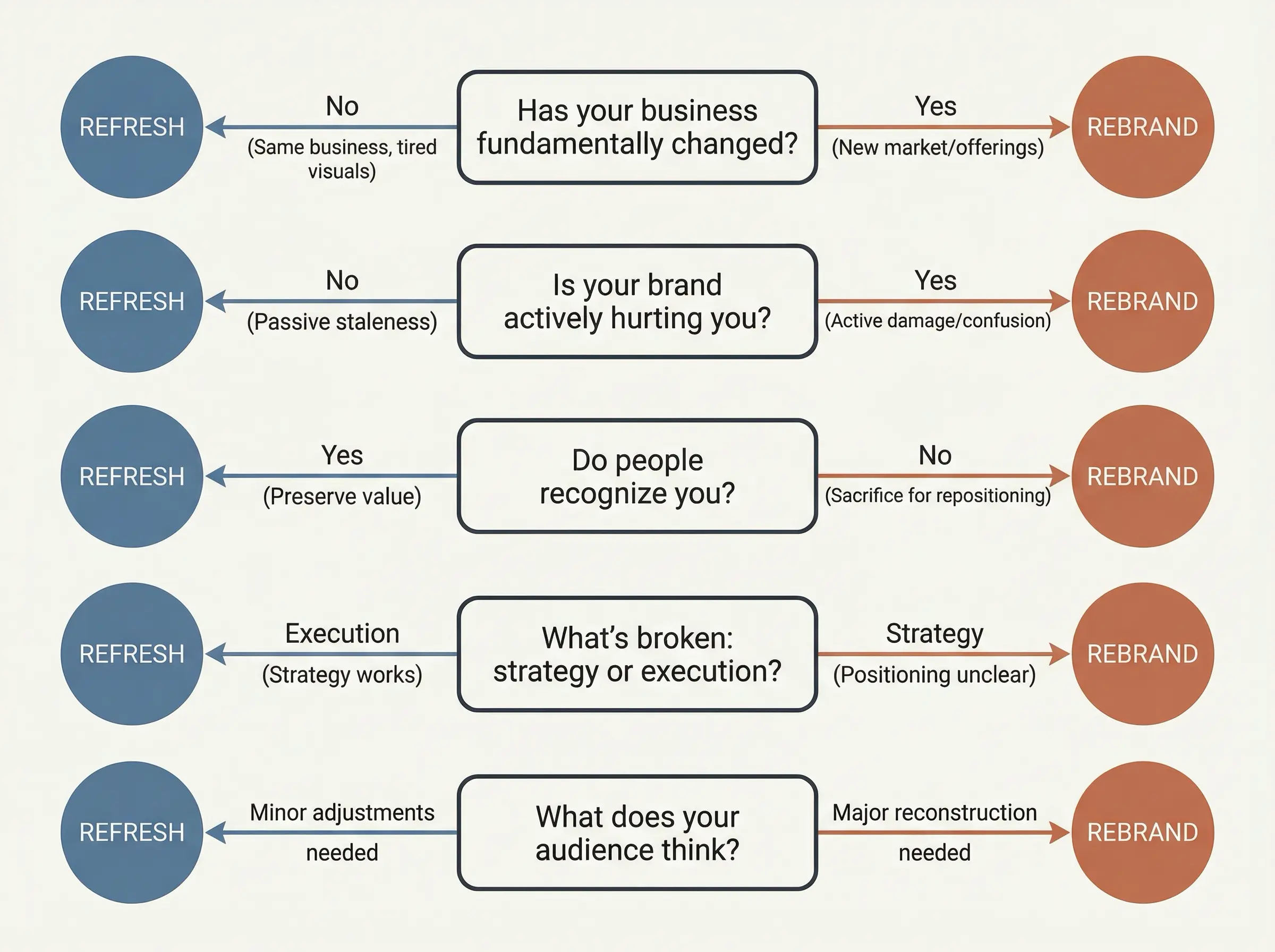
Before deciding which path fits, answer these honestly.
1. Has your business fundamentally changed?
If you've shifted industries, merged with another company, dramatically changed your service offerings, or moved into an entirely different market segment, your brand likely needs to reflect that shift. A refresh won't close that gap.
If your business does the same thing for the same people but your visual execution feels tired, a refresh handles it.
2. Is your brand actively hurting you?
There's a difference between "our website looks a bit dated" and "prospects tell us they didn't take us seriously because of our website."
Active damage requires active intervention. If your current brand creates confusion about what you do, attracts the wrong clients, or positions you in a market segment you've outgrown, that's rebrand territory.
Passive staleness? Refresh territory.
3. Do people recognize you?
Brand recognition has value. If clients, partners, and prospects associate your current identity with quality work and positive experiences, throwing that away costs you something real.
A refresh preserves recognition while improving execution. A rebrand sacrifices recognition for repositioning. Make sure the trade is worth it.
4. What's broken: the strategy or the execution?
This is the question that matters most.
If your positioning is clear, your messaging resonates, and your ideal clients understand what you offer, but your visual assets look dated or inconsistent, the strategy works. The execution needs attention. Refresh.
If your positioning is unclear, your messaging doesn't land, or you're attracting the wrong clients regardless of how polished your visuals look, the strategy needs work. Rebrand.
Execution problems don't require strategic solutions. Strategic problems don't get solved by prettier graphics.
5. What does your audience actually think?
Not what you assume. What they actually say.
Review client feedback. Look at how prospects describe you when they reach out. Notice which messages in your marketing get response and which get ignored.
The gap between how you see your brand and how your audience experiences it tells you whether you need minor adjustments or major reconstruction.
The Hidden Third Option
Sometimes the answer isn't rebrand or refresh. It's neither.
If your brand works, if it attracts the right clients, communicates your value, and supports your business goals, leave it alone. The urge to change things isn't always a signal that change is needed.
Boredom with your own brand isn't a business problem. It's a founder problem. Your audience sees your identity far less often than you do. What feels stale to you might feel familiar and trustworthy to them.
Making the Decision
Here's a simple framework.
Choose a refresh if:
- Your business model and positioning haven't changed
- Your current brand has recognition worth preserving
- The problem is execution quality, not strategic direction
- Your audience responds positively to your messaging but your visuals lag behind
Choose a rebrand if:
- Your business has fundamentally changed direction
- Your current brand actively creates confusion or misalignment
- You're entering a new market or targeting a different audience
- Your positioning no longer reflects who you are or where you're going
Choose neither if:
- Your brand works and you're just tired of looking at it
- You want to rebrand because competitors did
- The real problem is marketing effort, not brand assets
What Comes Next
Whichever path fits, start with clarity about the problem you're solving. A refresh without understanding what needs improving wastes time on the wrong details. A rebrand without strategic foundation builds a new house on the same shaky ground.
The best brand work, whether incremental or transformational, begins with honest assessment. Not what you wish were true. What actually is.

