The Problem With Watching the Clock
Hourly billing has been the default in creative work for decades. On the surface, it seems fair. You pay for the time spent. Simple.
Except it isn't.
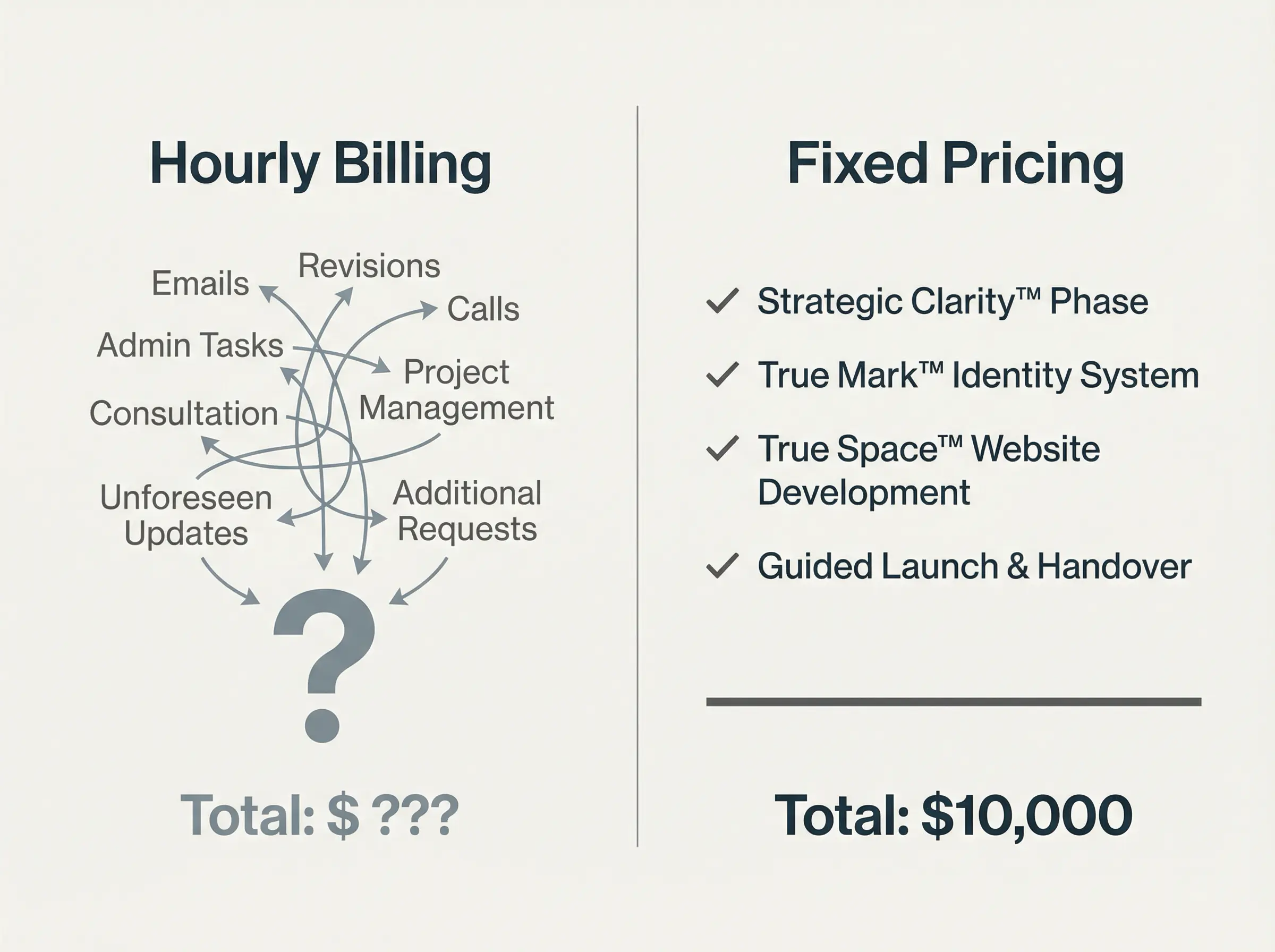
When a studio or freelancer charges by the hour, every interaction carries a hidden cost. Clients start rationing their own questions. They hesitate before sending feedback. They wonder if that 12-minute phone call just showed up on next month's invoice.
That's a terrible way to run a creative project. The work depends on open communication. When the billing model punishes communication, something breaks.
And it breaks on both sides. The service provider faces pressure too: spend more time and the client feels overcharged, spend less time and the work suffers. There's no version of hourly billing where both parties feel good about the math at the end.
Why We Moved to Fixed Pricing
When we built Studio FLACH's offer structure, we wanted the financial side of the relationship to feel as clear as the creative side. That meant removing ambiguity from the equation entirely.
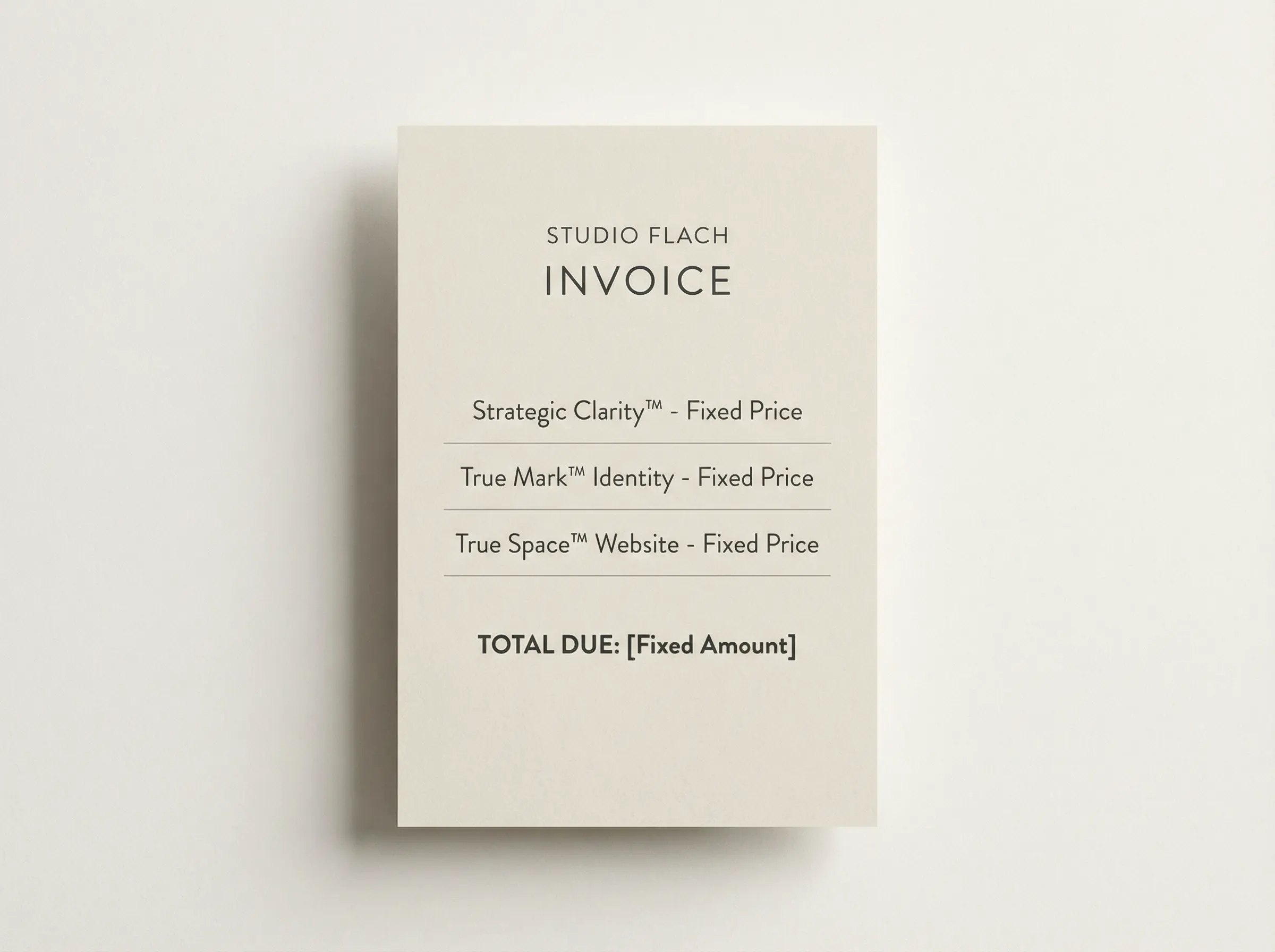
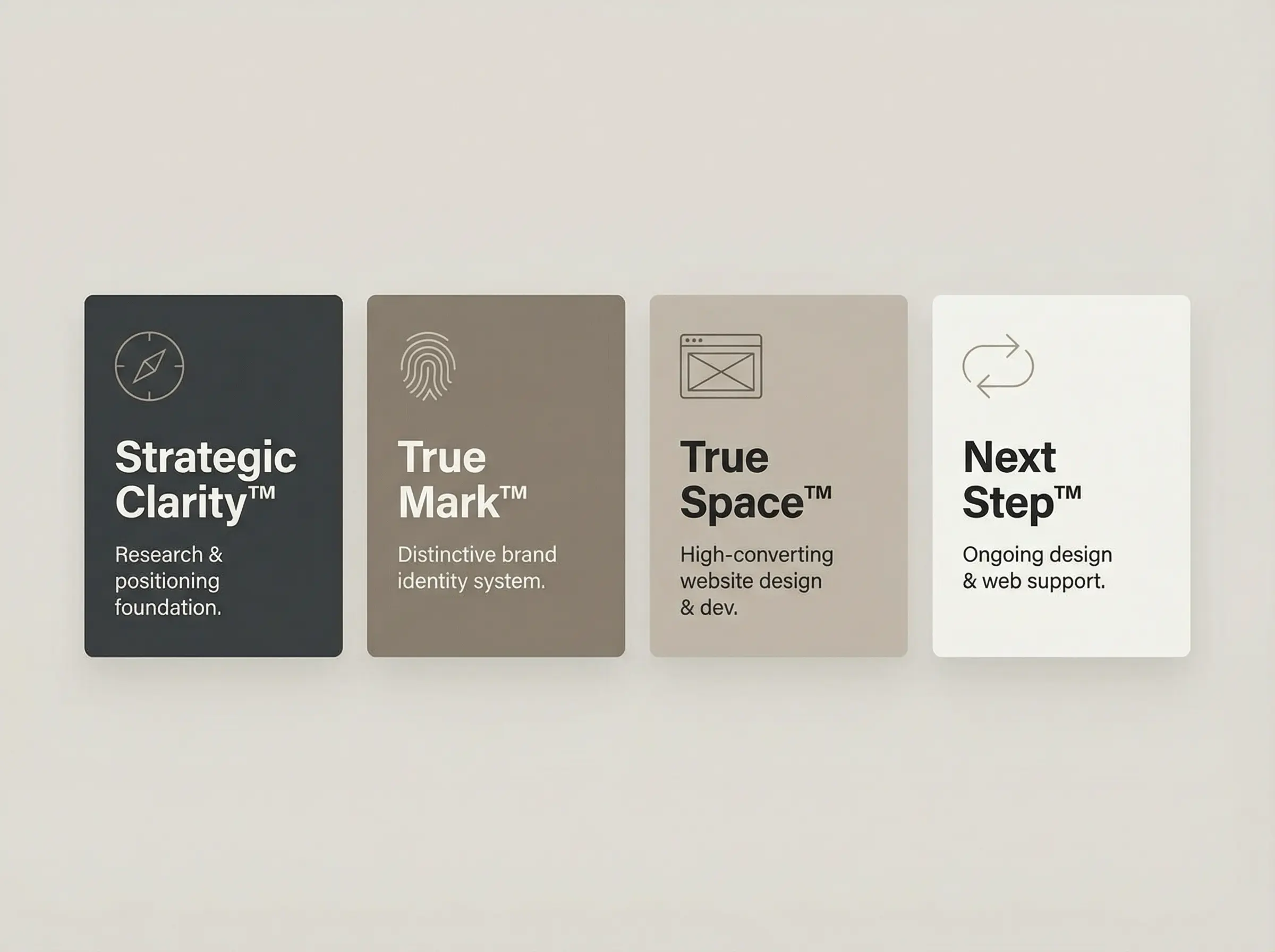
Every service we offer, Strategic Clarity™, True Mark™, True Space™, and Next Step™, has a fixed price. You see it before you commit. The scope is defined. The deliverables are listed. The number on the proposal is the number you pay.
Here's what that decision actually changed:
- Clients ask more questions. When there's no meter running, people engage with the process the way they should: openly, honestly, without doing mental math every time they pick up the phone.
- Scope stays honest. Fixed pricing forces us to define what's included before work begins. That protects both sides. You know what you're getting. We know what we're delivering.
- The focus stays on outcomes. We're not incentivized to stretch a project longer. We're incentivized to get it right. That alignment matters more than most people realize.
"But What If the Project Takes Longer Than Expected?"
Fair question. And the answer is straightforward: that's our problem, not yours.
We've been doing this for over a decade. We know how long our process takes. We've built our pricing around real timelines, real workloads, and real experience. If something runs over on our end, that doesn't change your invoice.
This only works because of how we structure the engagement. Our process is built in phases with clear milestones:
- Discovery and research establish the foundation.
- Strategic direction sets the course before any design work begins.
- Design development follows a structured feedback loop, not an open-ended guessing game.
- Launch and handoff are guided, not dumped in your lap.
Each phase has defined inputs, outputs, and review points. That structure is what makes fixed pricing sustainable. Without it, fixed pricing would just be a gamble. With it, it's a commitment.
What This Means for the Client Experience
The shift from hourly to fixed pricing changes more than the invoice. It changes the relationship.
When the money question is settled upfront, every conversation after that is about the work.
No surprise line items. No "we'll true up at the end of the month." No anxiety about whether asking for a revision just cost you another $200.
We also offer flexible payment options. You can pay upfront for a savings advantage or break it into installments. If you bundle services through our Signature Suite™, the pricing reflects that commitment. And if you come back for future work, our returning-client advantage applies automatically.
All of it is visible before you sign anything.
The Real Cost of "Affordable" Hourly Rates
A low hourly rate looks great in a proposal. But hourly rates are only half the equation. The other half is how many hours the project actually takes.
A 75/hour freelancer who takes 120 hours costs more than a fixed-price studio project scoped at 6,000. And with the hourly model, you often don't know the true total until the project is finished.
Two things to consider when comparing pricing models:
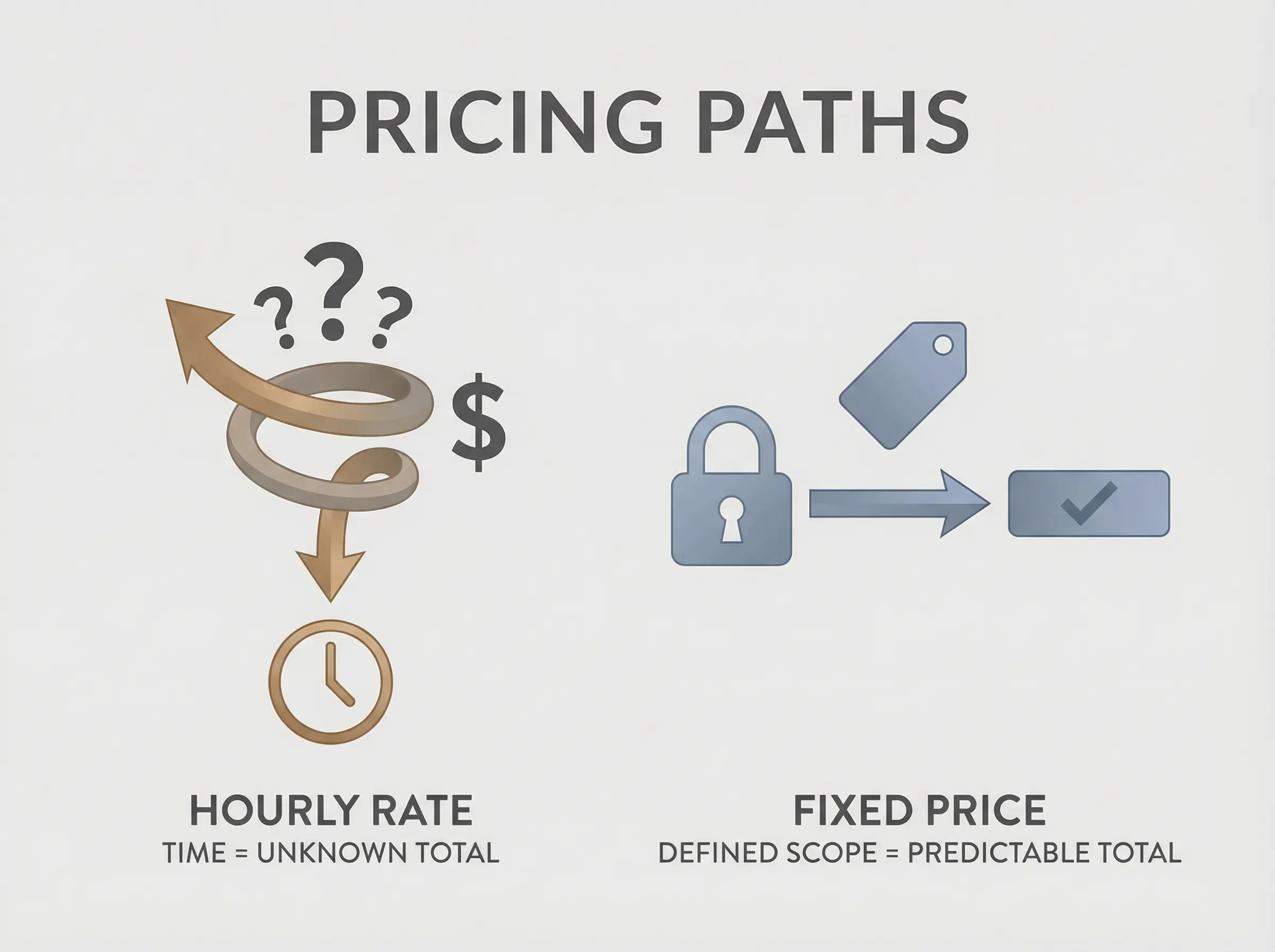
- Hourly billing rewards inefficiency. The longer it takes, the more the provider earns. That doesn't mean anyone is padding hours on purpose, but the incentive structure points in the wrong direction.
- Fixed pricing rewards clarity. The provider earns the same whether the project takes four weeks or five. So the incentive is to be organized, communicative, and decisive, which benefits everyone.
How to Know If Fixed Pricing Is Right for You
Fixed pricing works best when both sides are willing to define the work upfront. That means having a real conversation before a proposal goes out. It means being honest about your goals, your timeline, and your budget.
If you're looking for a partner who will bill you for every email and call it transparency, we're probably not the right fit.
If you want to know exactly what you're paying, exactly what you're getting, and exactly when it'll be done, that's how we work.

